
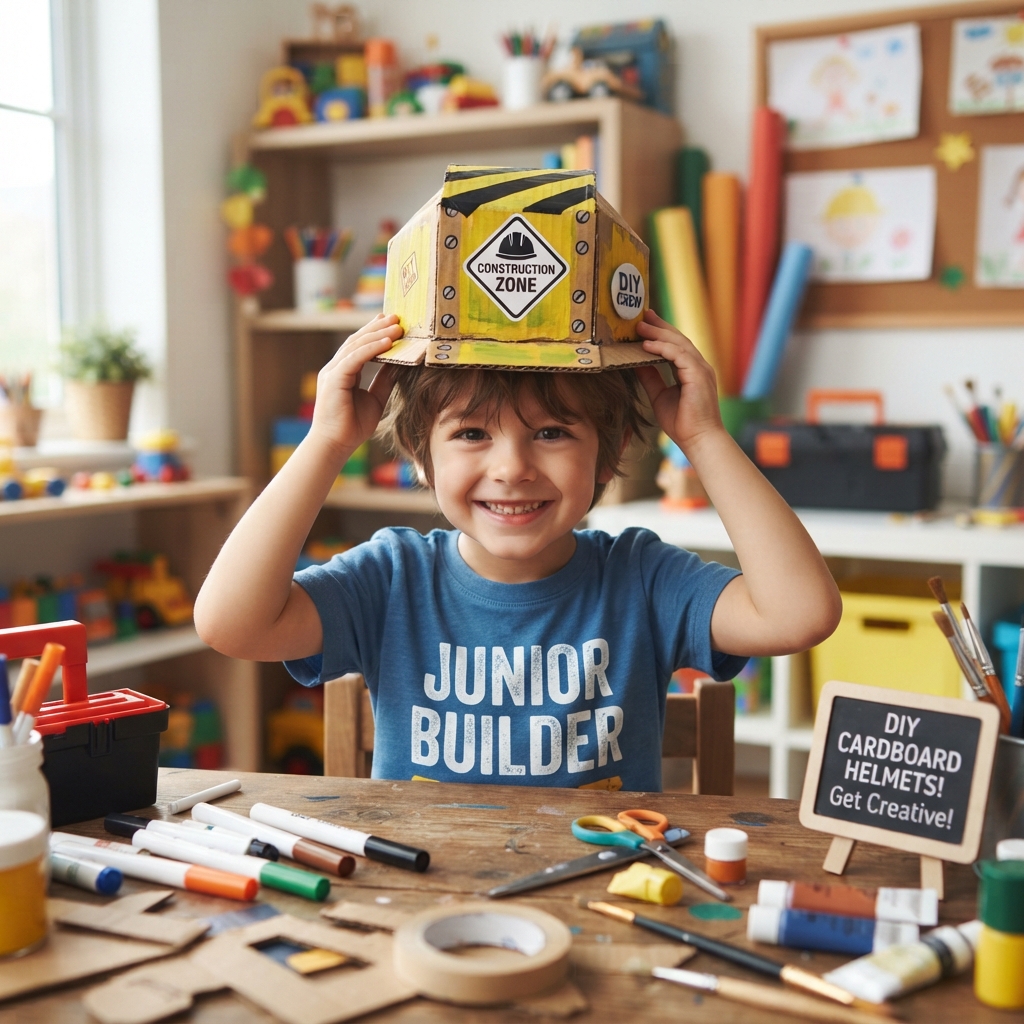
A cardboard construction worker’s helmet is a fantastic craft project that lets children create their own pretend safety helmet using recycled cardboard and simple craft materials. This fun activity encourages creativity, introduces children to the world of construction, and promotes imaginative play while developing important crafting skills.
Although the finished helmet looks like a real construction hard hat, it is made entirely from lightweight cardboard and is designed only for pretend play. It is not protective equipment and should never be used in real construction areas. Instead, it allows children to safely enjoy role-playing as builders, engineers, architects, and construction workers.
Whether you’re a parent, teacher, or camp leader, this easy project is perfect for home activities, classroom lessons, birthday parties, or STEM-inspired learning.
What Is a Cardboard Construction Helmet?
A cardboard construction helmet is a handmade craft created from recycled cardboard, paper, glue, and colorful decorations. It is shaped like a traditional hard hat and fits comfortably on a child’s head for imaginative games.
Children can wear their helmet while pretending to build houses, repair roads, design bridges, or supervise exciting construction projects.
Why Children Love This Craft
Kids enjoy making a cardboard construction helmet because it is:
- Easy to build
- Fun to decorate
- Made from recycled materials
- Lightweight and comfortable
- Great for pretend play
- Perfect for classroom projects
- Encourages creativity and storytelling
- Helps improve fine motor skills
Every helmet can be customized with different colors and decorations, making each project unique.
Materials You’ll Need
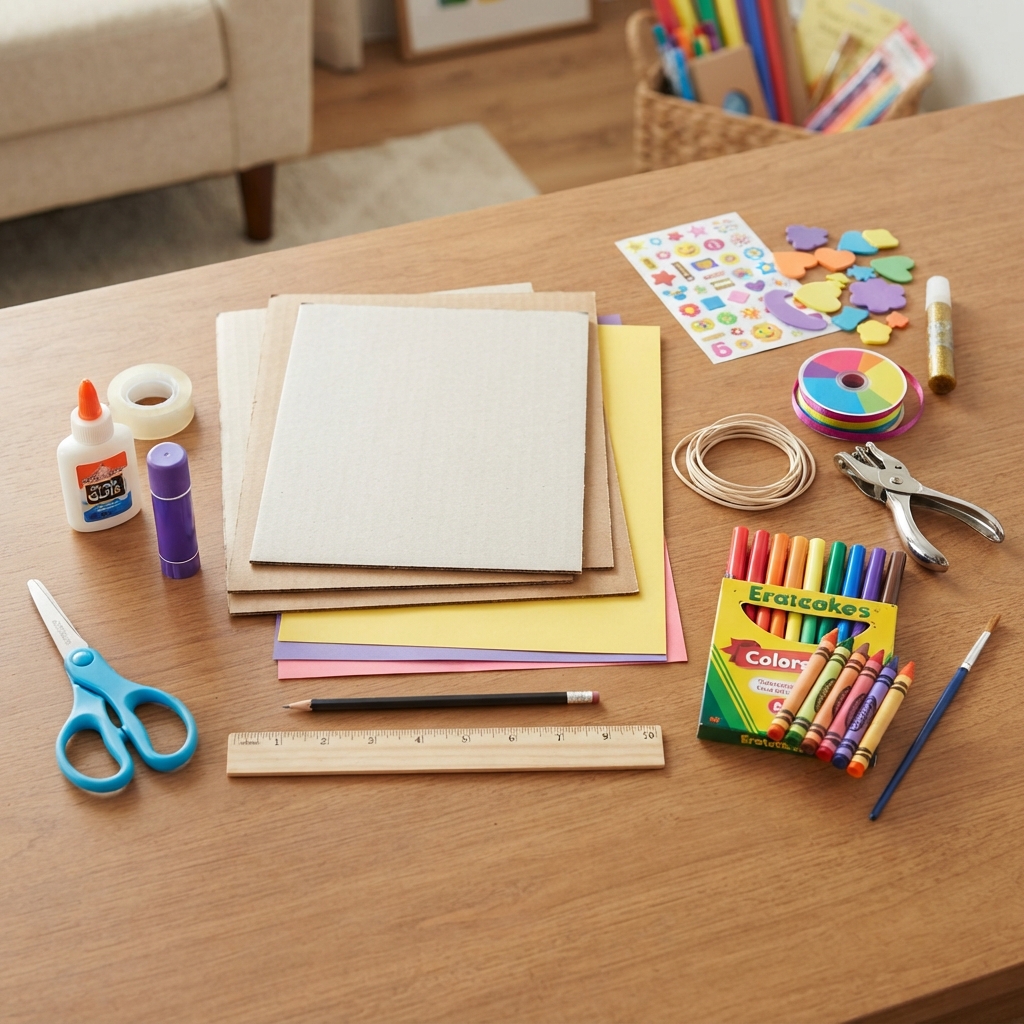
Gather these simple supplies before starting:
- Lightweight cardboard
- Construction paper
- Yellow paper or yellow paint
- Pencil
- Ruler
- Child-safe scissors
- School glue
- Glue stick
- Clear tape
- Markers
- Crayons or colored pencils
- Paintbrush (if painting)
- Elastic cord or ribbon
- Hole punch (adult assistance recommended)
- Stickers
- Foam shapes
- Glitter glue (optional)
Most of these materials are inexpensive and easy to find.
Prepare Your Workspace
Before beginning:
- Cover the table with newspaper or a craft mat.
- Organize all materials.
- Keep scissors and glue nearby.
- Wear an apron if using paint.
- Ask an adult to help with cutting thick cardboard.
A tidy workspace makes crafting easier and more enjoyable.
Step 1: Measure the Child’s Head
Wrap a strip of paper gently around the child’s head.
Mark where the strip overlaps.
Use this measurement to create a cardboard band that fits comfortably.
The helmet should sit securely without feeling too tight.
Step 2: Make the Helmet Band
Cut a long strip of cardboard about 5–7 centimeters (2–3 inches) wide.
Tape or glue the ends together to form a circle that matches the head measurement.
This becomes the base of the helmet.
Step 3: Create the Dome
Cut four long cardboard strips.
Glue one strip from the front to the back of the headband.
Glue another strip from one side to the other.
Add the remaining strips diagonally to form a rounded dome.
This framework gives the helmet its classic hard-hat shape.
Step 4: Cover the Helmet
Cut curved pieces of lightweight cardboard or thick paper.
Glue them over the dome framework until the top is completely covered.
Smooth each piece gently as the glue dries.
The helmet now begins to look like a real construction helmet.
Step 5: Add the Front Brim
Cut a curved strip of cardboard.
Glue it to the front edge of the helmet.
This brim gives the helmet its familiar construction-worker appearance.
Step 6: Paint or Cover the Helmet
Construction helmets are often bright yellow, but children can choose any color they like.
Popular choices include:
- Yellow
- Orange
- Red
- Blue
- Green
- White
- Pink
- Rainbow colors
Allow the paint or glue to dry completely before decorating.
Step 7: Decorate Your Helmet
Now comes the most exciting part!
Children can decorate their helmet with:
- Stars
- Hearts
- Lightning bolts
- Construction signs
- Animal stickers
- Foam letters
- Glitter glue
- Colorful stripes
- Smiley faces
- Their name
Every helmet becomes a unique creation.
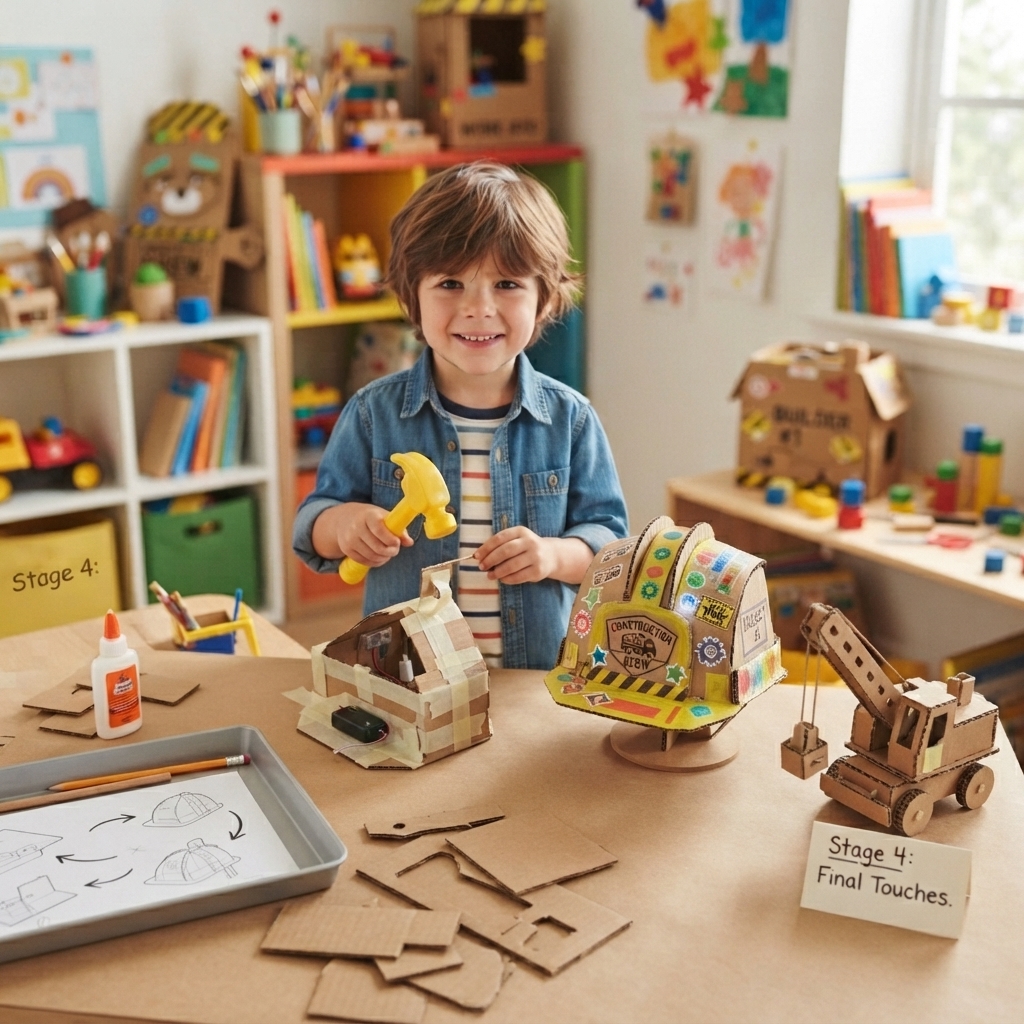
Creative Theme Ideas
Try one of these fun themes.
Builder’s Helmet
Decorate with yellow paint and black caution stripes.
Super Builder Helmet
Add superhero symbols and colorful lightning bolts.
Rainbow Builder
Cover the helmet with bright rainbow colors.
Space Engineer
Decorate with rockets, stars, and planets.
Dinosaur Construction Crew
Add dinosaur footprints and jungle leaves.
Princess Builder
Use pink, purple, flowers, and glitter.
Robot Engineer
Decorate with gears, buttons, and metallic designs.
Educational Benefits
Making a cardboard construction helmet helps children develop valuable skills, including:
- Fine motor coordination
- Hand-eye coordination
- Measuring
- Cutting and gluing
- Creative thinking
- Problem-solving
- Following instructions
- Concentration
- Patience
- Confidence
Craft projects also encourage children to recycle everyday materials creatively.
Learning About Community Helpers
This activity provides an opportunity to discuss careers such as:
- Construction workers
- Builders
- Engineers
- Architects
- Road workers
- Crane operators
- Safety inspectors
Children learn how these professionals help build safe homes, schools, bridges, roads, and playgrounds.
Pretend Play Ideas
After finishing the helmet, children can pretend to be:
- Construction workers
- Building supervisors
- Engineers
- Architects
- Road builders
- Crane operators
- Home designers
- Safety inspectors
Pretend play encourages communication, creativity, teamwork, and storytelling.
Build a Complete Construction Costume
Pair the cardboard helmet with other handmade crafts, including:
- Paper hammer
- Cardboard drill
- Cardboard wrench
- Paper screwdriver
- Paper measuring tape
- Cardboard construction shovel
- Safe paper saw
- Paper toolbox
Together they create a complete pretend construction workshop full of imaginative adventures.
Classroom Activities
Teachers can include this project during lessons about:
- Community helpers
- Construction
- Engineering
- Recycling
- STEM and STEAM education
- Art and design
- Career exploration
Students can wear their helmets during dramatic play, storytelling, or classroom construction challenges.
Safety Reminder
Although this cardboard helmet resembles a real hard hat, it is only for pretend play.
Teach children that:
- It does not protect against falling objects.
- It should never be used on real construction sites.
- Real safety helmets are specially designed to protect workers.
- Adults should supervise cutting and assembly during the craft.
Learning the difference between toys and real safety equipment is an important lesson.
Display Finished Helmets
Celebrate everyone’s creativity by:
- Organizing a “Little Builders Parade”
- Creating a classroom construction display
- Setting up a pretend building site
- Taking group photos
- Awarding certificates for creativity and teamwork
Displaying children’s work builds confidence and pride.
Tips for Success
For the best results:
- Use sturdy recycled cardboard.
- Reinforce the inside with extra strips if needed.
- Allow glue and paint to dry completely.
- Keep decorations lightweight.
- Encourage children to create their own colorful designs.
Most importantly, focus on creativity, teamwork, and having fun.
Conclusion
A cardboard construction worker’s helmet is a fun, affordable, and educational craft project that combines recycling, creativity, and imaginative play. Using simple materials like cardboard, paper, glue, and markers, children can create a colorful pretend helmet while developing fine motor skills, problem-solving abilities, and artistic confidence.
Whether made at home, in the classroom, or during a community craft event, this project inspires young builders to explore the exciting world of construction through safe role-playing. Combined with a paper toolbox, paper hammer, cardboard drill, paper screwdriver, cardboard wrench, measuring tape, and other handmade tools, the cardboard construction helmet completes a fantastic pretend builder’s toolkit that encourages endless hours of creative learning and fun.
