
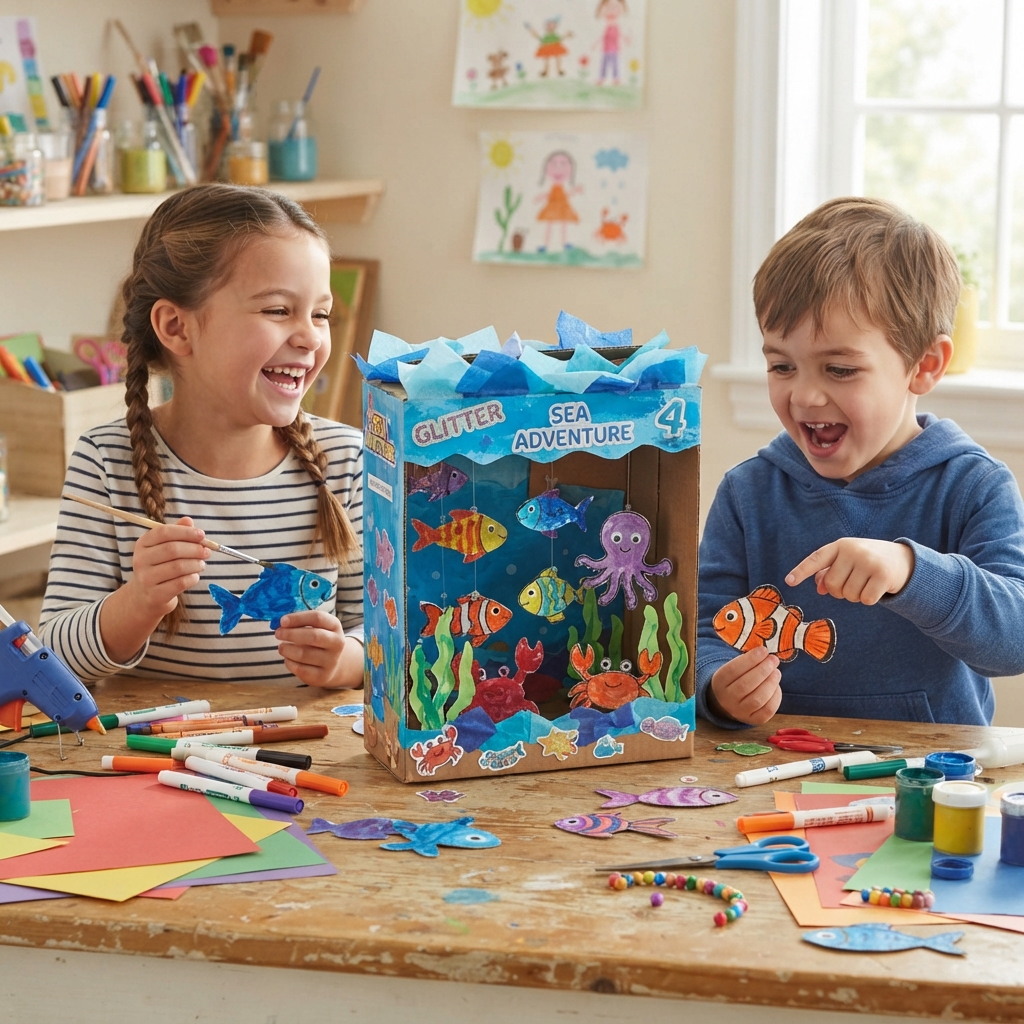
Creating a cardboard fish tank is a wonderful craft project that lets children explore the colorful world beneath the sea without getting wet! Using recycled cardboard, bright paper, paint, and a few simple craft supplies, kids can build their own pretend aquarium filled with cheerful fish, playful sea creatures, waving seaweed, and sparkling underwater treasures. This hands-on activity encourages creativity, teaches children about marine life, and promotes recycling in a fun and engaging way.
Whether at home, in the classroom, or during a craft workshop, a cardboard fish tank is an exciting project that children will proudly display and enjoy for hours.
Why Make a Cardboard Fish Tank?
The ocean is full of fascinating animals and beautiful underwater landscapes. Building a cardboard fish tank allows children to learn about sea life while creating an imaginative miniature aquarium.
This project helps children:
- Develop creativity through designing colorful sea creatures.
- Improve fine motor skills by cutting, folding, and gluing.
- Learn about fish and ocean habitats.
- Practice color recognition and simple design skills.
- Encourage storytelling and imaginative play.
- Understand the importance of recycling by reusing cardboard.
Materials You’ll Need
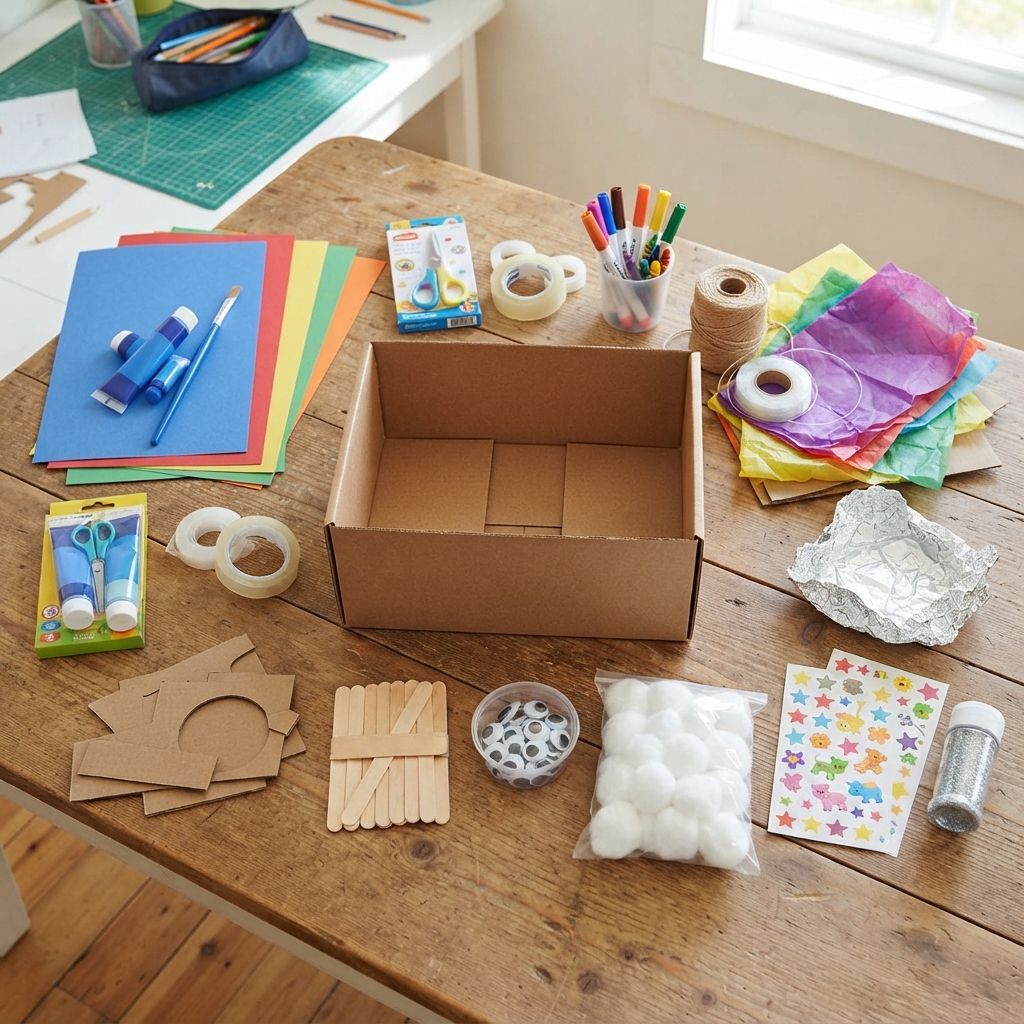
Before you begin, gather these easy-to-find supplies:
- A medium or large cardboard box
- Blue construction paper or blue paint
- Colored construction paper
- Child-safe scissors
- Craft glue or tape
- Markers and crayons
- String or fishing line
- Tissue paper
- Cardboard scraps
- Popsicle sticks
- Googly eyes
- Cotton balls
- Aluminum foil (optional)
- Stickers and glitter (optional)
Most of these materials are inexpensive and can be found around the house.
Step 1: Build the Aquarium
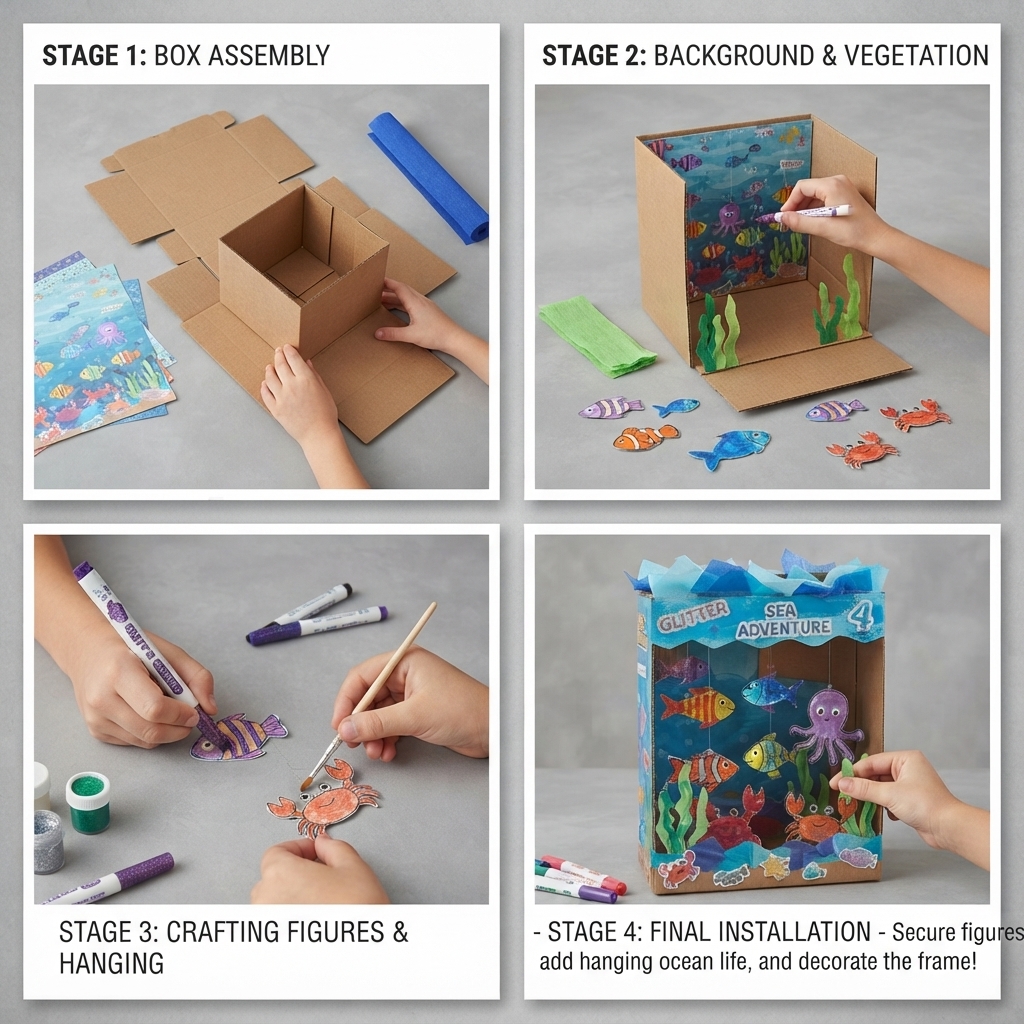
Choose a sturdy cardboard box and remove one large side to create the front viewing window.
Cover the inside walls with blue paper or paint them blue to represent the ocean. If you have clear recycled plastic packaging, tape it across the front opening to give the fish tank the appearance of real aquarium glass.
Step 2: Create the Ocean Floor
Decorate the bottom of the aquarium with a colorful underwater scene.
Add:
- Brown paper sand
- Small paper rocks
- Green seaweed
- Colorful coral reefs
- Seashell drawings
- Treasure chests
- Tiny paper pebbles
Layer different materials to create a realistic underwater environment.
Step 3: Make Colorful Fish
Cut fish shapes from cardboard or thick paper.
Decorate them with:
- Bright colors
- Stripes
- Polka dots
- Zigzag patterns
- Rainbow scales
- Smiling faces
Add googly eyes or draw funny expressions to give each fish its own personality.
Step 4: Create Other Sea Animals
An aquarium becomes even more exciting with a variety of sea creatures.
Children can make:
- Starfish
- Seahorses
- Jellyfish
- Sea turtles
- Crabs
- Octopuses
- Dolphins
- Clams
- Stingrays
- Tiny shrimp
Each new animal helps children discover the diversity of ocean life.
Step 5: Make the Fish Swim
Punch a small hole in the top of each fish.
Tie a piece of string to each one and attach the strings to the inside roof of the cardboard box.
As the fish tank moves, the fish gently sway, creating the illusion that they are swimming through the water.
Step 6: Add Underwater Plants
Cut long strips of green paper to create seaweed.
Twist tissue paper into coral shapes and glue colorful plants around the aquarium.
You can also add floating bubbles using white or light-blue paper circles.
Step 7: Decorate the Aquarium
Create a colorful sign with a fun name such as:
- Ocean Adventure Aquarium
- Happy Fish Tank
- Little Sea World
- Coral Reef Aquarium
- Underwater Friends
Decorate the sign with bubbles, shells, and tiny fish.
Step 8: Add Fun Details
Make your aquarium even more exciting by adding:
- Pirate treasure chest
- Sunken ship
- Diving helmet
- Tiny submarine
- Colorful shells
- Smooth stones
- Bubble streams
- Sea stars
These details encourage children to explore every corner of their underwater world.
Step 9: Enjoy Pretend Play
Once the cardboard fish tank is complete, children can enjoy many imaginative activities.
They can pretend to:
- Feed the fish.
- Become aquarium keepers.
- Teach visitors about sea animals.
- Rescue baby sea turtles.
- Discover hidden treasure.
- Count different fish species.
- Invent exciting underwater adventures.
Pretend play helps children build creativity, confidence, and communication skills.
Learning Benefits
Making a cardboard fish tank offers many educational opportunities.
Children practice:
- Fine motor coordination
- Creative thinking
- Storytelling
- Animal recognition
- Vocabulary development
- Counting and sorting
- Observation skills
- Problem-solving
- Artistic expression
The project also introduces children to marine habitats and the importance of protecting oceans and sea life.
Eco-Friendly Crafting
One of the greatest benefits of this activity is recycling.
Old cardboard boxes, paper scraps, tissue paper, and recycled packaging become colorful fish, coral reefs, and aquarium decorations instead of being thrown away.
Children learn that everyday materials can be transformed into amazing works of art while helping protect the environment.
Tips for Parents and Teachers
To make the activity even more enjoyable:
- Read a children’s book about ocean animals before crafting.
- Play relaxing ocean sounds while children work.
- Encourage children to invent new fish species and sea creatures.
- Talk about keeping oceans clean and protecting marine life.
- Display the finished aquarium in a classroom or playroom.
- Invite children to explain the different sea animals in their aquarium.
Celebrate every child’s imagination, creativity, and curiosity about the underwater world.
Conclusion
Making a cardboard fish tank for children is a creative and educational craft project that combines art, learning, recycling, and imaginative play. Children enjoy designing colorful fish, building beautiful underwater habitats, and inventing exciting ocean adventures while developing valuable artistic and problem-solving skills. Best of all, a simple cardboard box can become a magical aquarium where curiosity grows, creativity shines, and every child can discover the wonders of life beneath the waves.
