
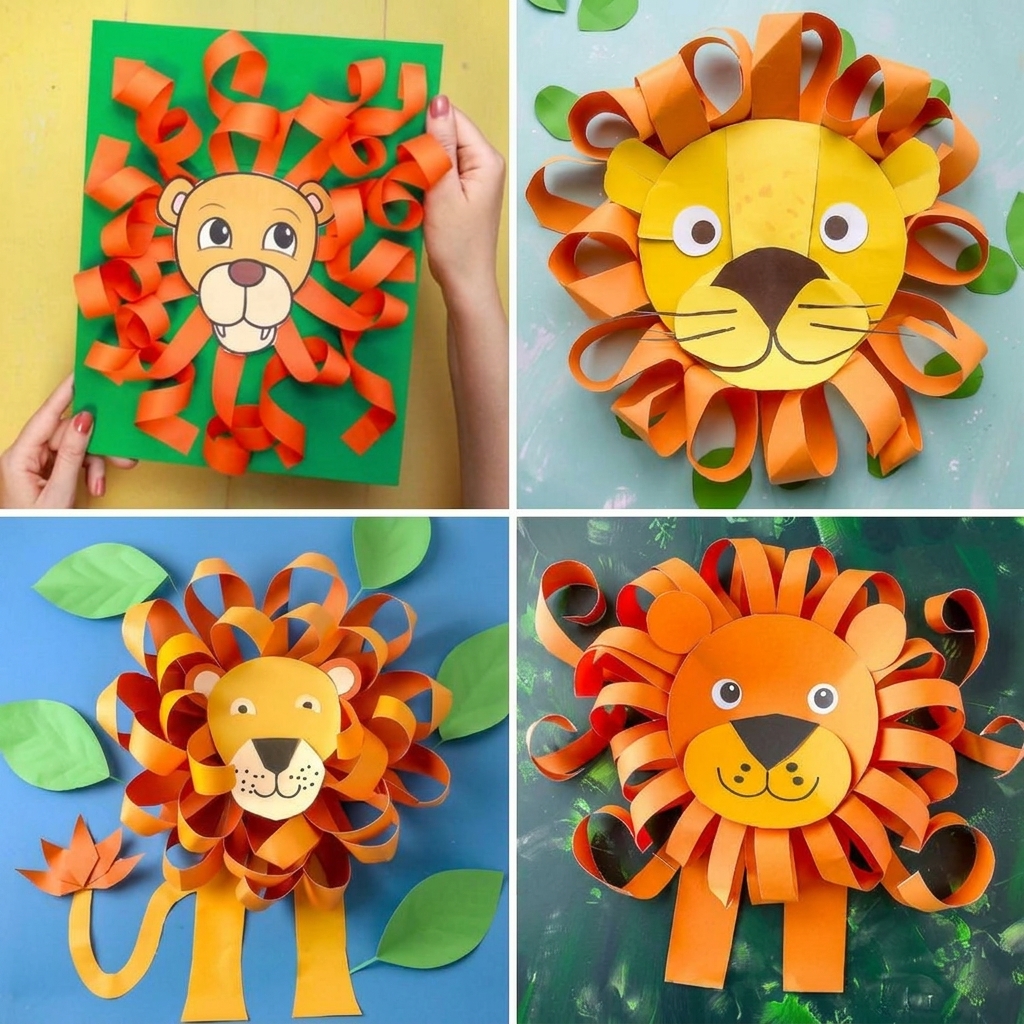
Arts and crafts are an exciting way for children to learn, imagine, and create. Simple paper projects encourage young learners to explore colors, shapes, and textures while developing important life skills. One enjoyable activity is making a paper lion. This craft is perfect for children at home, in the classroom, at summer camps, or during after-school programs. With just a few basic materials, children can create a cheerful lion while learning about one of the most famous animals in the world.
Lions are often called the “King of the Jungle,” although they actually live mainly in grasslands and savannas. Their golden fur, large manes, and powerful appearance make them exciting animals to study and create. A paper lion project combines creativity, learning, and hands-on fun in a way that children of many ages can enjoy.
Why Make a Paper Lion?
Paper crafts help children develop valuable skills while encouraging creativity. As they draw, cut, glue, and decorate, they improve hand strength, coordination, and concentration. Completing a craft also builds confidence because children can proudly display something they created themselves.
Making a paper lion helps children:
- Strengthen fine motor skills.
- Improve hand-eye coordination.
- Practice using child-safe scissors.
- Learn to follow step-by-step instructions.
- Develop patience and focus.
- Express creativity through art.
- Learn about wildlife and habitats.
- Build confidence by completing a project.
This activity combines learning with play, making it both educational and enjoyable.
Materials You’ll Need
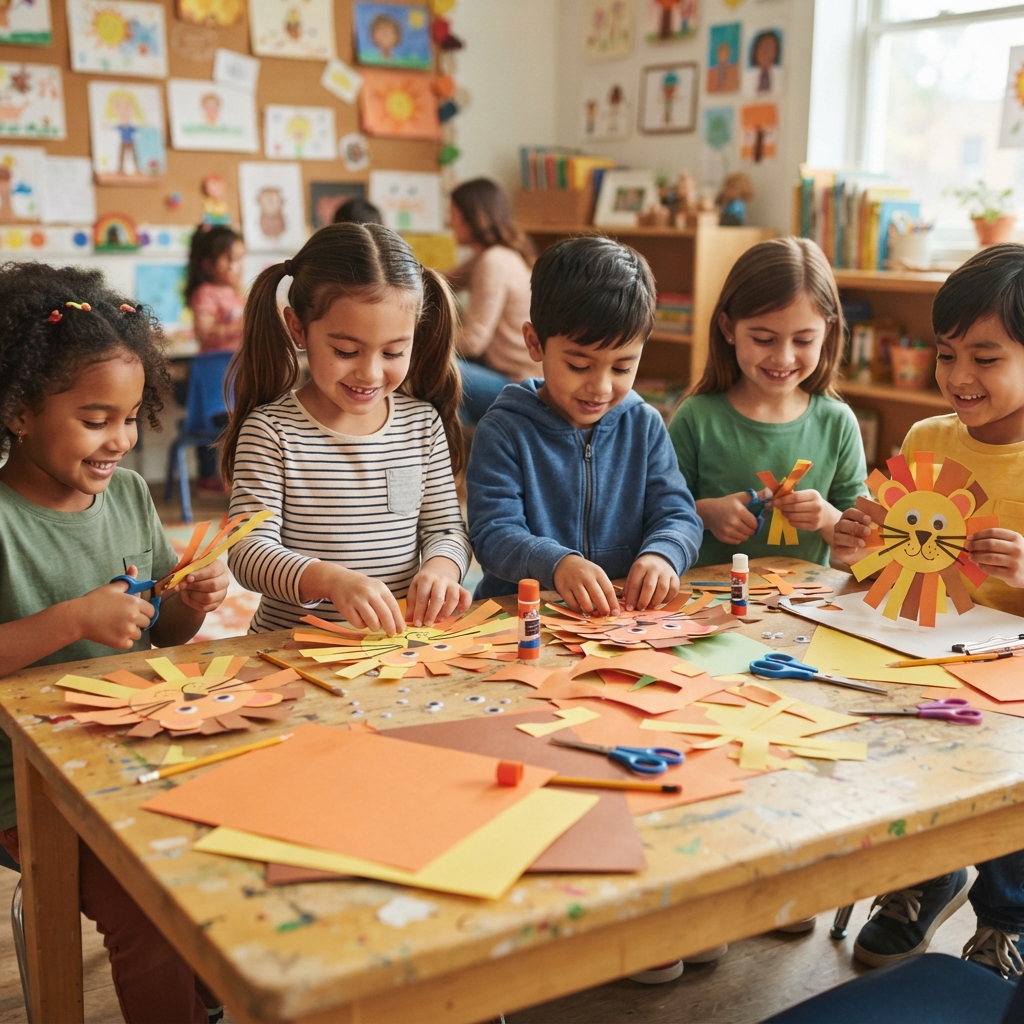
Gather these simple supplies before you begin:
- Yellow construction paper
- Orange or brown construction paper
- White construction paper
- Black construction paper
- Cardstock for the background
- Child-safe scissors
- Glue stick or school glue
- Pencil
- Black marker
- Googly eyes (optional)
- Crayons or colored pencils
- Yarn strips or tissue paper for the mane (optional)
- Glitter or stickers (optional)
These materials are inexpensive and easy to find in most homes and classrooms.
Step 1: Create the Lion’s Head
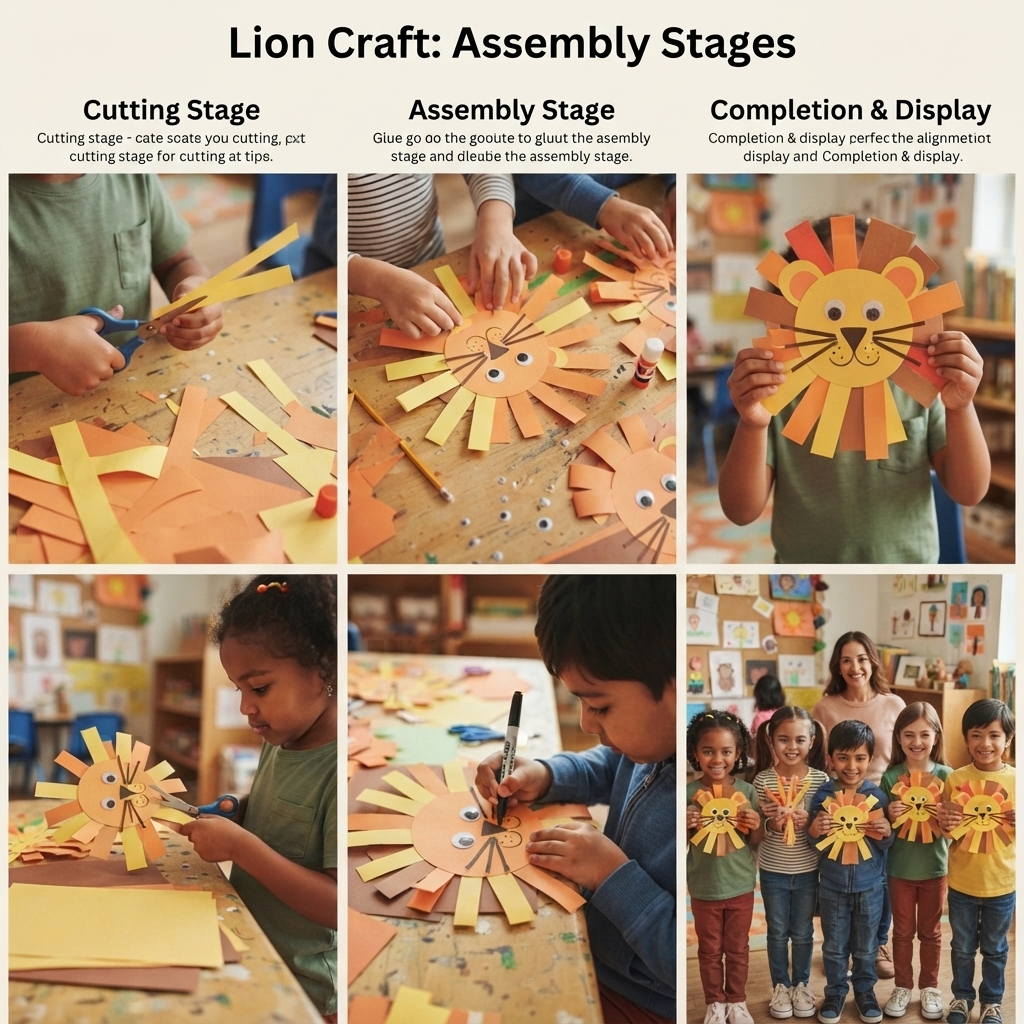
Draw a large circle on yellow paper for the lion’s face.
Cut it out carefully.
Next, draw a larger circle with a wavy edge on orange or brown paper to make the lion’s mane.
Glue the yellow face in the center of the mane.
The fluffy mane is one of the lion’s most recognizable features and makes the craft especially fun.
Step 2: Make the Lion’s Body
Cut a large oval from yellow paper for the body.
Next, cut four long rectangles for the legs and a thin strip for the tail.
Add a small tuft of orange or brown paper to the end of the tail.
Glue all the pieces together to form the lion’s body.
Step 3: Add the Facial Features
Cut two small ears from yellow paper and glue them behind the mane.
Add two eyes using googly eyes or draw them with a black marker.
Glue on a small black paper nose and draw a smiling mouth.
Children can also add whiskers, rosy cheeks, or funny eyebrows to give their lion a unique personality.
Step 4: Assemble the Lion
Glue the completed head onto the body.
Attach the legs and tail if they have not already been added.
Check that all the pieces are secure before decorating.
The lion is now ready to come to life!
Step 5: Decorate the Background
Create a beautiful African savanna for the lion.
Children can add:
- Green grass
- Tall trees
- Acacia trees
- Blue sky
- Bright sunshine
- Clouds
- Flowers
- Butterflies
- Birds
- Rocks
They can even include other safari animals such as elephants, giraffes, zebras, or monkeys to create a complete wildlife scene.
Add Creative Details
Every paper lion can be different.
Children may decorate their lion with:
- A colorful crown
- A bow tie
- A birthday hat
- Glasses
- Decorative patterns
- Glitter
- Colorful stickers
- A friendly smile
Creative decorations make each lion one of a kind.
Learn About Lions
This project is also a wonderful opportunity to learn about wildlife.
Children can discover interesting facts such as:
- Lions are mammals.
- Most wild lions live in Africa.
- Male lions have large manes.
- Lions live in family groups called prides.
- Lion cubs enjoy playing together.
- Lions are skilled hunters and powerful runners.
Learning about animals while creating them helps children remember new information more easily.
Encourage Storytelling
After completing the lion, invite children to create an adventure.
Ask questions like:
- What is your lion’s name?
- Where does it live?
- Who are its friends?
- What exciting adventure will it have?
- How does it help other animals?
Storytelling encourages imagination, vocabulary development, and communication skills.
Classroom Extension Activities
Teachers can extend the project through cross-curricular learning.
Students can:
- Label the lion’s body parts.
- Compare lions with tigers or leopards.
- Read books about African wildlife.
- Write a short story about their lion.
- Create a classroom safari mural.
- Present fun lion facts to classmates.
These activities combine art, science, reading, and writing.
Family Craft Time
Parents can also enjoy making paper lions at home.
Working together allows families to:
- Spend quality time together.
- Encourage creativity.
- Practice communication.
- Learn about wildlife.
- Celebrate children’s artistic achievements.
Craft projects often become happy family memories.
Challenge Older Children
Older children can make the project more detailed by:
- Folding paper to create a 3D mane.
- Using strips of paper to create curly fur.
- Designing a lion family.
- Making movable legs with paper fasteners.
- Building an entire safari landscape.
These creative challenges inspire problem-solving and artistic growth.
Skills Children Develop
This project helps children practice many valuable skills, including:
- Fine motor control
- Cutting accuracy
- Gluing techniques
- Shape recognition
- Color recognition
- Creativity
- Planning
- Concentration
- Patience
- Self-confidence
These skills support success in school and everyday life.
Display the Finished Lions
Completed paper lions make wonderful decorations.
Children can proudly display them:
- On classroom bulletin boards
- At school art exhibitions
- On bedroom walls
- On the family refrigerator
- In library displays
- During wildlife-themed events
Displaying artwork helps children feel proud of their creativity and hard work.
Conclusion
Making a paper lion is a fun, creative, and educational project that children of all ages can enjoy. Using simple materials such as colored paper, glue, scissors, and imagination, young artists can create a magnificent lion while developing important artistic, motor, and problem-solving skills. Along the way, they learn fascinating facts about one of the world’s most admired animals and gain confidence by completing a project from start to finish.
Whether the activity takes place at home, in a classroom, or during a community craft event, a paper lion project encourages children to explore wildlife, express their creativity, and enjoy learning through hands-on experiences. Every finished lion is unique, reflecting the imagination and personality of its creator. Most importantly, children discover that with creativity and a few simple supplies, an ordinary piece of paper can become a magnificent safari animal.
