
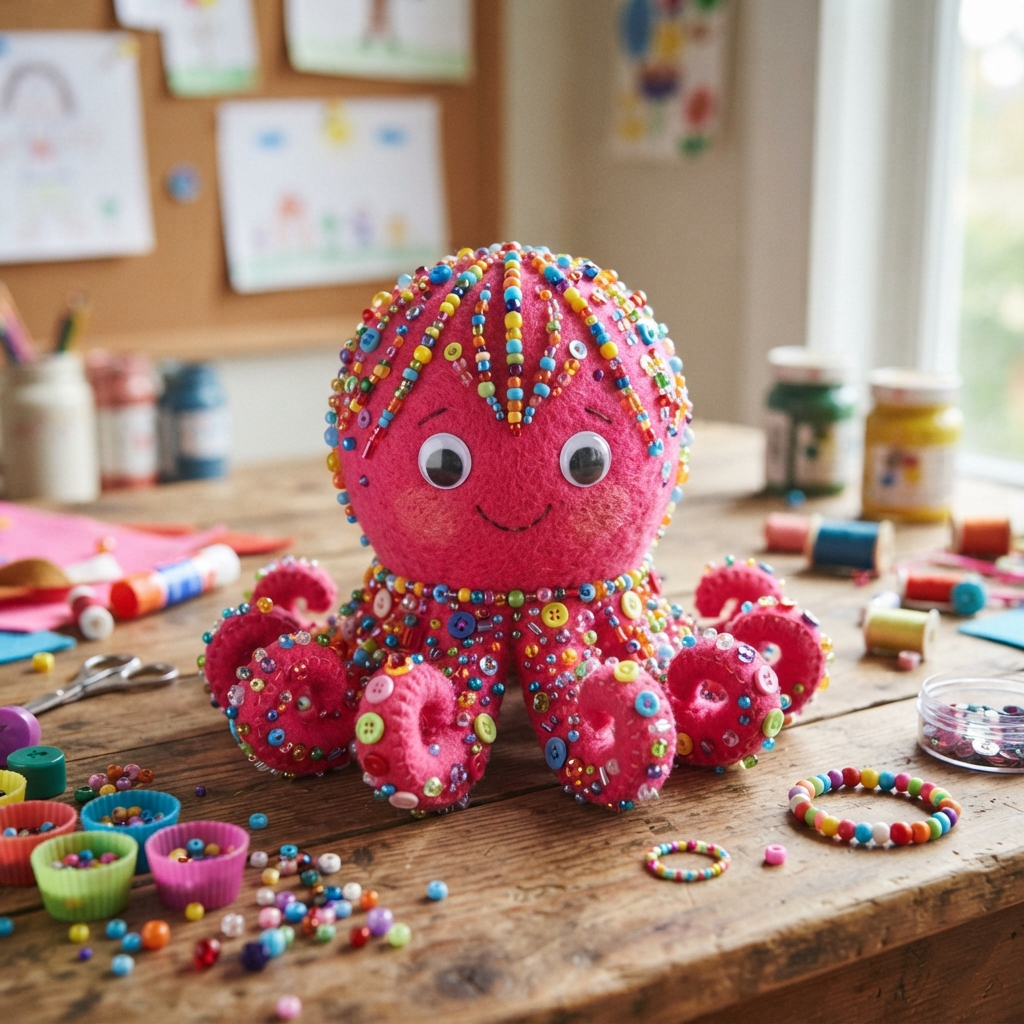
Arts and crafts are a wonderful way to encourage children to explore their creativity while developing important skills such as fine motor control, patience, concentration, and problem-solving. Ocean-themed projects are especially exciting because they combine imaginative play with opportunities to learn about fascinating sea creatures. One delightful activity is creating a cute octopus decorated with colorful beads. This simple craft transforms an ordinary paper octopus into a sparkling underwater masterpiece that children will proudly display.
Whether completed at home, in a classroom, at a summer camp, or during an arts-and-crafts workshop, this project is suitable for children of many ages. Every child can personalize their octopus with colorful bead patterns, making each finished craft completely unique.
Why Make a Beaded Octopus?
Octopuses are among the most amazing animals in the ocean. Their eight flexible arms, large expressive eyes, and incredible intelligence capture children’s curiosity and imagination. Their rounded body and long tentacles provide plenty of space for colorful decorations.
This craft encourages children to:
- Express their creativity
- Improve fine motor skills
- Practice hand-eye coordination
- Learn about colors and patterns
- Develop patience and focus
- Build confidence by completing a project
At the same time, children discover interesting facts about marine life.
Materials You’ll Need
Gather all the supplies before starting.
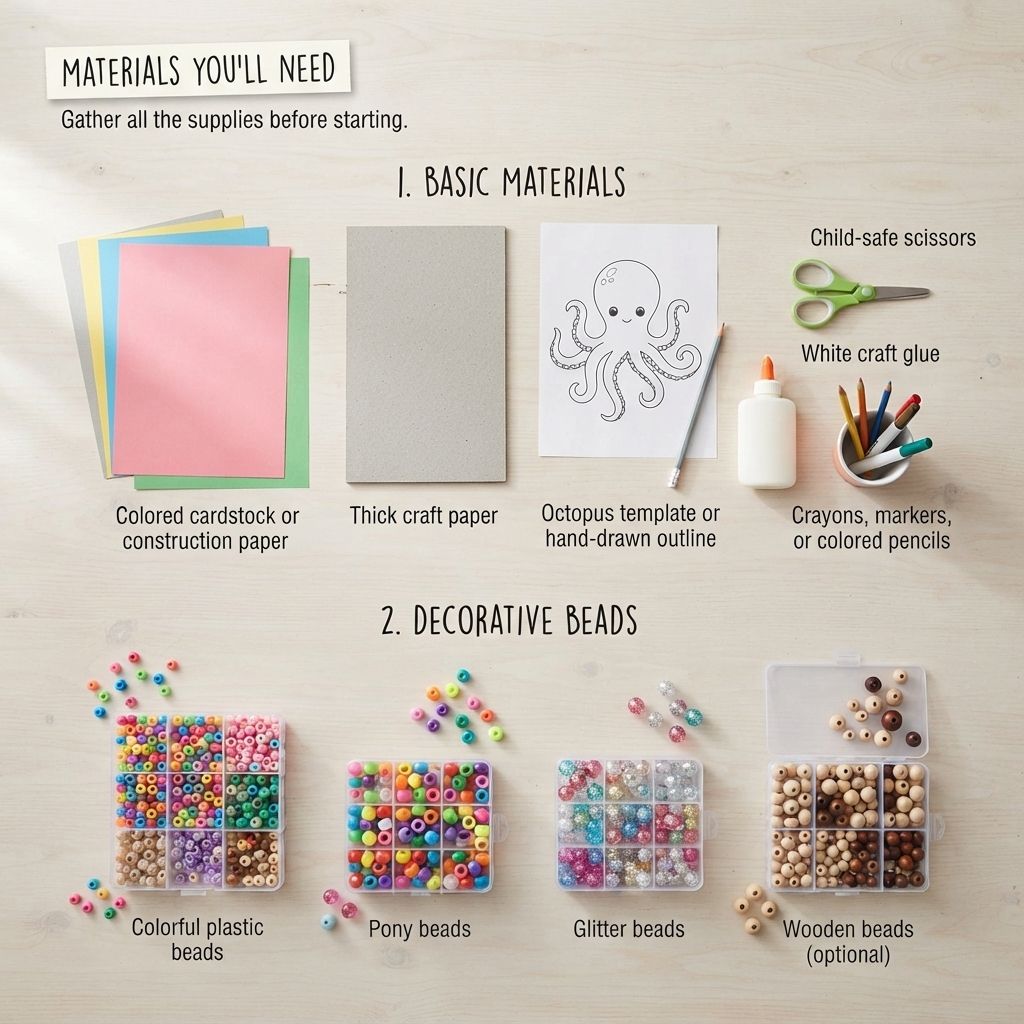
Basic Materials
- Colored cardstock or construction paper
- Thick craft paper
- Octopus template or hand-drawn outline
- Child-safe scissors
- White craft glue
- Pencil
- Crayons, markers, or colored pencils
- Colorful plastic beads
- Pony beads
- Glitter beads
- Wooden beads (optional)
Decorative Supplies
- Googly eyes
- Glitter glue
- Sequins
- Foam stickers
- Small seashells
- Colorful gems
- Ribbon pieces
Step 1: Prepare the Octopus
Begin by drawing or printing a large octopus template.
The template should include:
- A round head
- Eight tentacles
- Large eyes
- A smiling mouth
Children carefully cut out the shape using child-safe scissors.
Younger children may use pre-cut templates, while older children can draw their own designs.
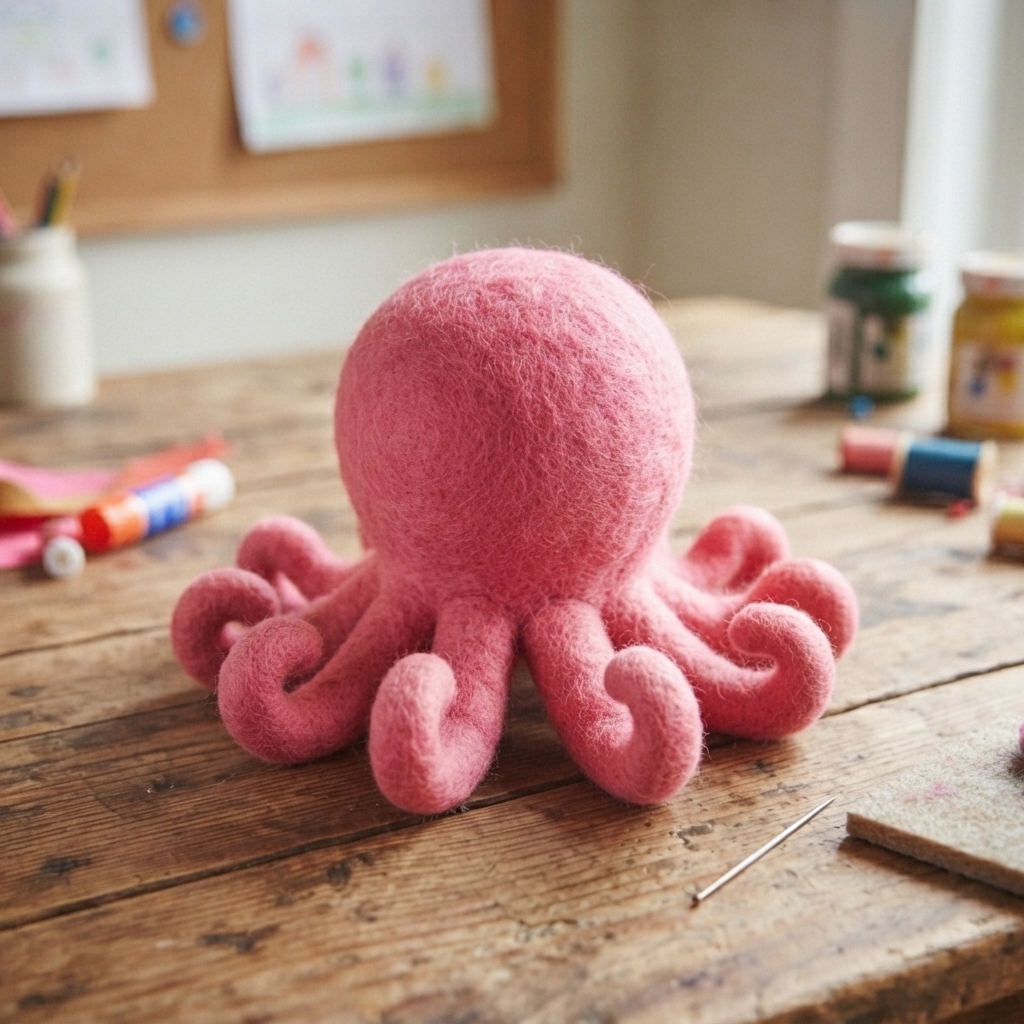
Step 2: Color the Octopus
Before adding beads, invite children to color their octopus.
Popular colors include:
- Purple
- Pink
- Blue
- Turquoise
- Orange
- Yellow
- Rainbow colors
Encourage children to invent unusual color combinations and create fantasy sea creatures.
Step 3: Decorate with Colorful Beads
Now comes the most exciting part.
Apply glue to one small section at a time.
Children gently place beads onto the glued areas to create decorative patterns.
Ideas include:
- Rainbow stripes
- Spirals
- Polka dots
- Hearts
- Flowers
- Waves
- Zigzags
- Mosaic designs
Using different bead sizes creates an attractive textured effect.
Step 4: Decorate the Tentacles
The eight tentacles offer endless decorating possibilities.
Children can:
- Add rows of tiny beads
- Alternate bead colors
- Create repeating patterns
- Add glitter accents
- Decorate the suction cups with mini beads
Each tentacle can have its own unique design.
Step 5: Create a Friendly Face
A cheerful face brings the octopus to life.
Children can add:
- Large googly eyes
- Rosy cheeks
- A smiling mouth
- Eyelashes
- Tiny eyebrows
- Glitter highlights
Every octopus develops its own adorable personality.
Creative Color Themes
Children enjoy experimenting with different artistic styles.
Rainbow Octopus
Decorate each tentacle using a different rainbow color.
Ocean Octopus
Use shades of blue, turquoise, teal, and white.
Sparkling Octopus
Combine glitter beads, sequins, and shiny gems.
Tropical Octopus
Bright pink, orange, yellow, and turquoise create a lively tropical look.
Magical Octopus
Pastel colors with pearl beads give the craft a magical appearance.
Create an Underwater Scene
The octopus becomes even more exciting when placed inside a complete ocean background.
Children can add:
- Fish
- Dolphins
- Sea turtles
- Starfish
- Jellyfish
- Seahorses
- Coral reefs
- Seaweed
- Bubbles
- Sand
Together these decorations create a colorful underwater world.
Educational Benefits
This project supports many areas of child development.
Fine Motor Skills
Picking up and placing small beads strengthens finger muscles and improves precision.
Hand-Eye Coordination
Children learn to carefully position each bead where they want it.
Concentration
Completing detailed bead patterns requires attention and patience.
Creativity
Every child creates a completely original octopus using their own imagination.
Color Recognition
Children explore how different colors work together.
Pattern Recognition
Creating repeated bead designs introduces simple mathematical concepts.
Confidence
Completing a colorful craft gives children a sense of accomplishment.
Fun Facts About Octopuses
Adults can share interesting information while children work.
Children may discover that:
- Octopuses have eight arms.
- They are among the smartest sea animals.
- They can change color to camouflage themselves.
- Their suction cups help them grab objects.
- They live in oceans around the world.
- Some octopuses can squeeze through very tiny spaces.
Learning while crafting makes the activity even more engaging.
Teaching Ocean Conservation
This project offers a perfect opportunity to discuss protecting marine environments.
Children can learn about:
- Reducing plastic waste
- Recycling materials
- Keeping beaches clean
- Respecting marine animals
- Protecting ocean habitats
These conversations encourage lifelong environmental awareness.
Perfect for School and Home
This craft works well for:
- Ocean-themed classroom units
- Preschool art projects
- Elementary school science lessons
- Summer camps
- Library activities
- Homeschool projects
- Rainy-day crafts
Multiple octopuses displayed together create a beautiful classroom ocean mural.
Family Craft Time
Parents and children can enjoy making several octopuses together.
Families might create:
- An octopus family
- Ocean greeting cards
- Bedroom decorations
- Handmade gifts
- A colorful underwater collage
Crafting together strengthens family relationships while encouraging creativity.
Safety Tips
To ensure a safe crafting experience:
- Supervise young children when using small beads.
- Use child-safe scissors.
- Choose non-toxic craft glue.
- Store beads in small containers.
- Clean the workspace afterward.
- Allow the glue to dry completely before displaying the craft.
Display Ideas
The finished beaded octopus can become:
- Wall art
- Classroom decoration
- Bedroom decoration
- Greeting card
- Gift for family members
- Bulletin board display
- Ocean-themed collage
- Summer decoration
Children feel proud when their artwork is displayed.
Helpful Crafting Tips
For the best results:
- Sort beads by color before beginning.
- Apply glue in small sections.
- Mix bead sizes for texture.
- Encourage original ideas.
- Allow plenty of drying time.
- Celebrate creativity instead of perfection.
Creative Extensions
After completing one octopus, children can continue with additional ocean crafts.
Ideas include:
- A family of octopuses
- A hanging ocean mobile
- A bookmark with an octopus design
- A 3D octopus made from recycled cardboard
- An underwater mural featuring many sea creatures
- An ocean-themed classroom display
- A mixed-media marine art project
These extensions encourage teamwork, creativity, and continued exploration of ocean life.
Conclusion
Creating a cute octopus decorated with beads is a fun, colorful, and educational craft that combines creativity with hands-on learning. As children carefully decorate their octopus using bright beads and imaginative patterns, they strengthen fine motor skills, improve concentration, and build confidence in their artistic abilities.
Whether the project is completed at school, at home, or during a community craft event, it provides an enjoyable opportunity to explore the wonders of marine life while encouraging creativity and environmental awareness. Every finished octopus becomes a unique piece of art that reflects the child’s imagination and celebrates the beauty of the ocean.
