
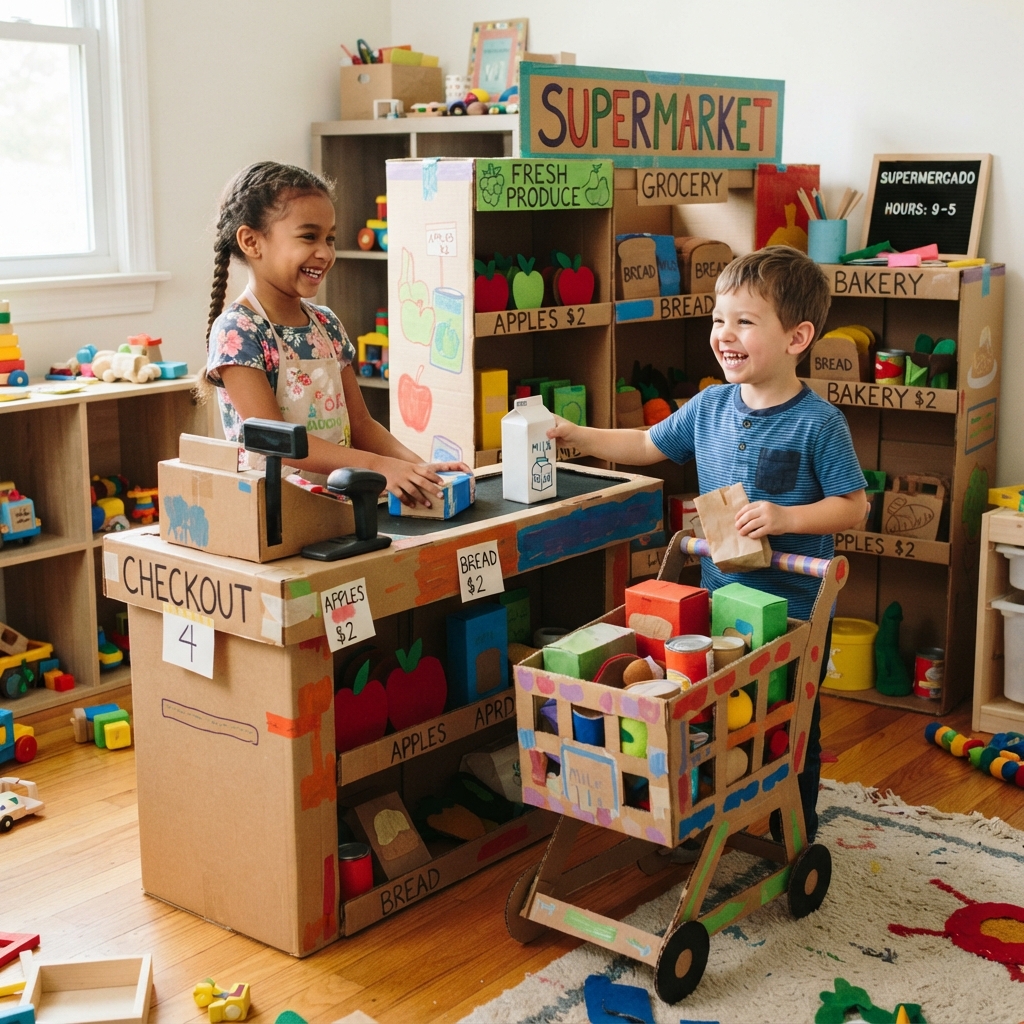
A children’s cardboard supermarket is a creative and educational craft project that transforms ordinary cardboard boxes into a colorful grocery store filled with pretend food, shopping carts, checkout counters, and smiling customers. This hands-on activity combines art, recycling, and imaginative play, giving children the chance to explore everyday shopping while developing important life skills.
Perfect for homes, classrooms, daycare centers, or community workshops, a cardboard supermarket encourages teamwork, creativity, and endless hours of pretend play.
Why Build a Children’s Cardboard Supermarket?
Children love pretending to shop, organize products, and help customers. Building their own supermarket allows them to create a miniature world where they can learn through fun activities.
This project helps children:
- Develop creativity by designing their own store.
- Improve fine motor skills through cutting, folding, and gluing.
- Practice counting and simple math during pretend shopping.
- Learn about healthy foods and grocery shopping.
- Build communication and teamwork through role-playing.
- Understand the value of recycling by reusing cardboard materials.
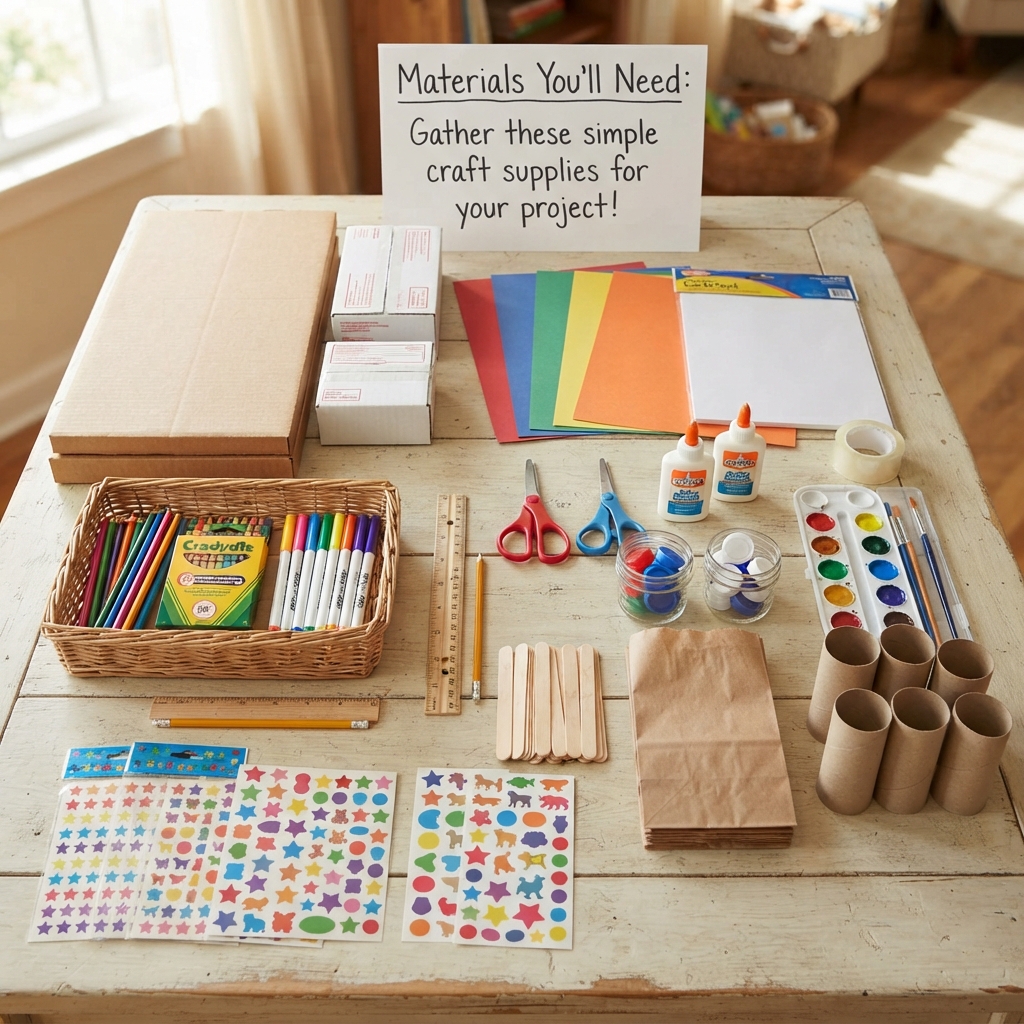
Materials You’ll Need
Before you begin, gather these simple craft supplies:
- Large cardboard boxes
- Small cardboard boxes
- Colored construction paper
- Child-safe scissors
- Craft glue or tape
- Markers and crayons
- Paint (optional)
- Bottle caps
- Popsicle sticks
- Paper bags
- Cardboard tubes
- Ruler
- Pencil
- Stickers for decoration
Most of these materials can be found at home or in the recycling bin.
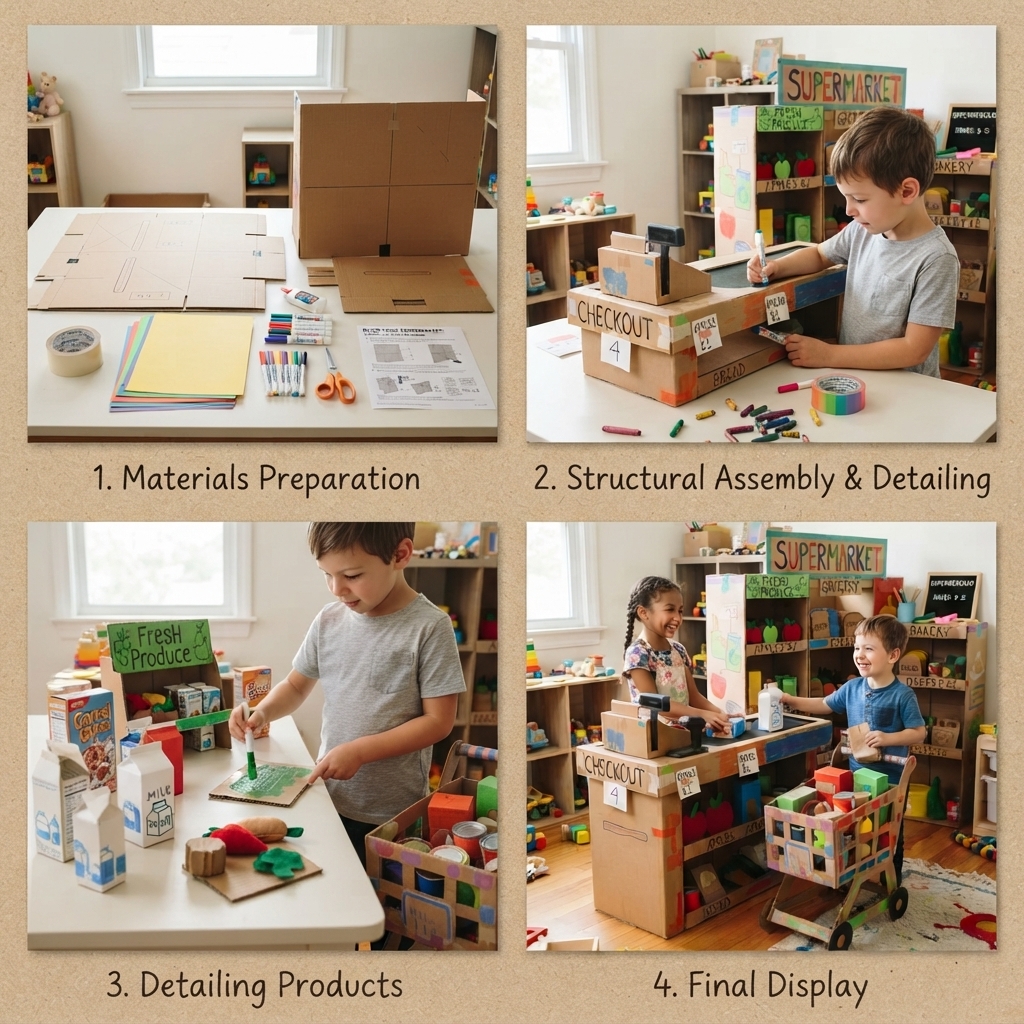
Step 1: Build the Supermarket
Use a large cardboard box to create the supermarket building.
Cut out a wide entrance and large display windows. Decorate the outside with bright colors and create a cheerful store sign.
Fun supermarket names include:
- Happy Kids Market
- Rainbow Grocery Store
- Little Shoppers Supermarket
- Sunshine Food Market
- Friendly Family Grocery
Invite children to decorate the sign with colorful letters and drawings.
Step 2: Create Store Shelves
Cut sturdy cardboard strips to build shelves inside the supermarket.
Organize them into different sections, such as:
- Fruits and vegetables
- Bakery
- Dairy products
- Snacks
- Drinks
- Frozen foods
Arranging products helps children learn about organization and categories.
Step 3: Make Pretend Groceries
Create colorful grocery items using small pieces of cardboard and paper.
Children can make:
- Apples
- Bananas
- Oranges
- Bread
- Milk cartons
- Juice boxes
- Cereal boxes
- Cookies
- Pasta
- Cheese
- Eggs
- Rice bags
Decorate each item with bright labels and fun illustrations.
Step 4: Build a Checkout Counter
Use a small cardboard box to create a checkout station.
Add:
- Cash register
- Scanner
- Receipt printer
- Coin drawer
- Credit card reader
Make pretend money, paper receipts, and reusable paper shopping bags.
Step 5: Create Shopping Carts and Baskets
Fold cardboard into small shopping baskets or carts.
Use bottle caps as wheels if making carts.
Children will enjoy collecting groceries before heading to the checkout.
Step 6: Add Store Signs
Create colorful department signs, including:
- Fresh Produce
- Bakery
- Dairy
- Snacks
- Drinks
- Checkout
- Special Offers
- Customer Service
These signs make the supermarket feel realistic and easy to explore.
Step 7: Decorate the Store
Bring the supermarket to life with fun decorations.
Add:
- Balloons
- Flowers
- Welcome posters
- Sale signs
- Price labels
- Store clock
- Shopping lists
- Friendly cartoon customers
These colorful details make the store warm and inviting.
Step 8: Enjoy Pretend Shopping
Once the supermarket is finished, children can play many exciting roles.
They can pretend to be:
- Customers
- Cashiers
- Store managers
- Shelf stockers
- Delivery workers
- Bakers
- Fruit sellers
They can also create shopping lists, compare prices, organize products, and help customers find what they need.
Learning Benefits
A children’s cardboard supermarket offers many educational opportunities.
Children practice:
- Counting and basic math
- Sorting and organizing
- Reading simple labels
- Communication skills
- Problem-solving
- Teamwork
- Creative thinking
- Fine motor coordination
- Imaginative storytelling
The project also teaches children about healthy eating, shopping habits, and responsibility.
Eco-Friendly Crafting
One of the greatest benefits of this activity is using recycled materials.
Old cardboard boxes, paper scraps, bottle caps, and packaging become shelves, grocery items, shopping carts, and decorations instead of being thrown away.
Children learn that recycling helps protect the environment while inspiring creativity.
Tips for Parents and Teachers
To make the project even more enjoyable:
- Read a story about grocery shopping before starting.
- Encourage children to create their own food brands.
- Discuss healthy food choices while making groceries.
- Let each child design a different supermarket department.
- Display the finished supermarket in the classroom or playroom.
- Invite children to explain how their supermarket works.
Celebrate every child’s creativity, teamwork, and imagination throughout the activity.
Conclusion
A children’s cardboard supermarket is a fun and educational craft project that combines creativity, recycling, and imaginative play. Children enjoy building shelves, creating pretend groceries, decorating colorful displays, and acting as shoppers or cashiers. Along the way, they strengthen important skills in communication, organization, counting, and problem-solving while learning about everyday life. Best of all, a simple cardboard box can become a lively supermarket where every shopping trip is filled with learning, creativity, and joyful adventures.
