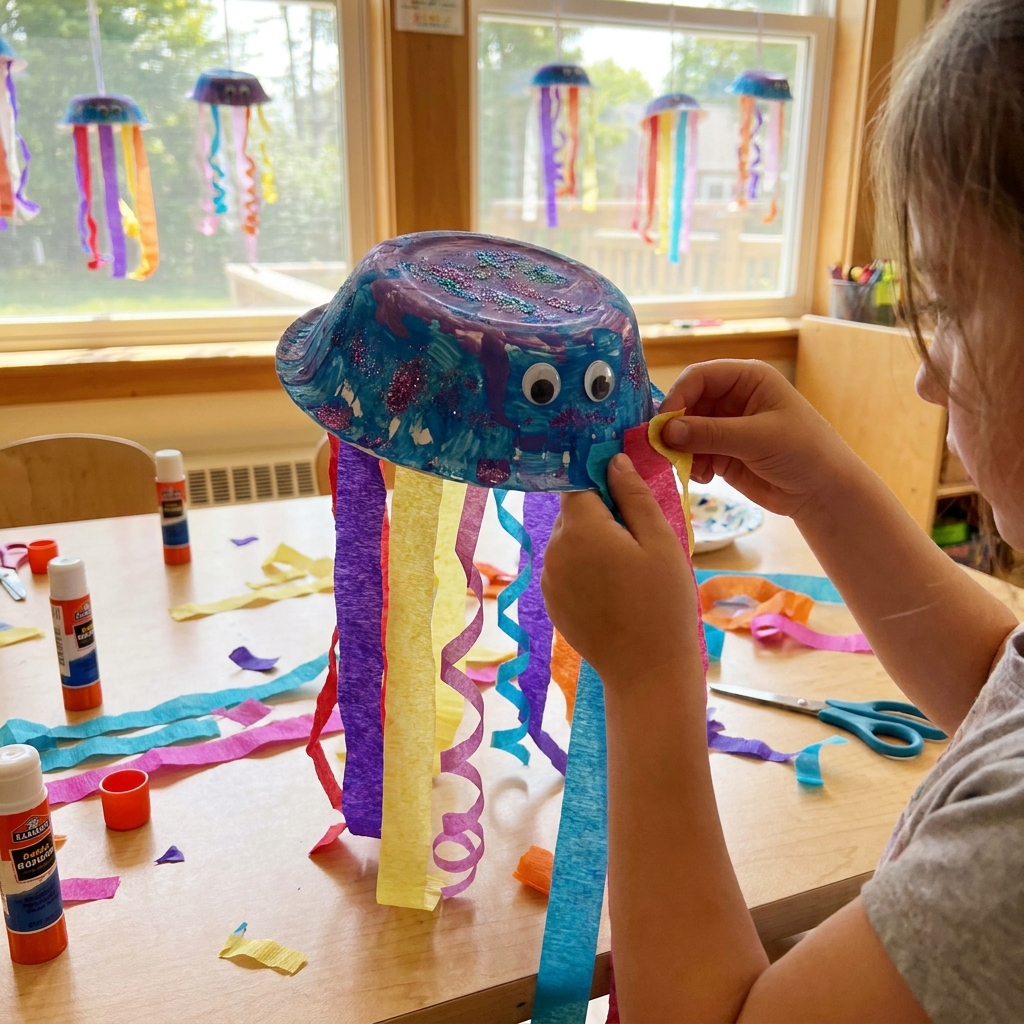
Craft activities are a fantastic way to encourage children to learn through creativity and play. They help develop important skills while allowing young artists to express their imagination. One enjoyable and educational craft is making a paper jellyfish. This colorful ocean-themed project is simple enough for young children and exciting enough to capture the attention of older kids as well.
A paper jellyfish project is perfect for classrooms, homeschooling, summer camps, libraries, or a rainy afternoon at home. Using only a few inexpensive materials, children can create a beautiful sea creature while learning interesting facts about life beneath the waves.
Why Choose a Paper Jellyfish Craft?
Jellyfish are among the most fascinating animals in the ocean. Their graceful movements, flowing tentacles, and unique body shapes make them wonderful subjects for children’s art projects. Unlike many sea animals, jellyfish have no bones and gently drift with ocean currents, making them mysterious and exciting to learn about.
Creating a paper jellyfish encourages children to use their creativity while strengthening important developmental skills. They practice cutting, folding, gluing, arranging, and decorating, all of which improve fine motor control and hand-eye coordination. The project also teaches patience, concentration, and problem-solving as children carefully assemble their artwork.
Materials You’ll Need
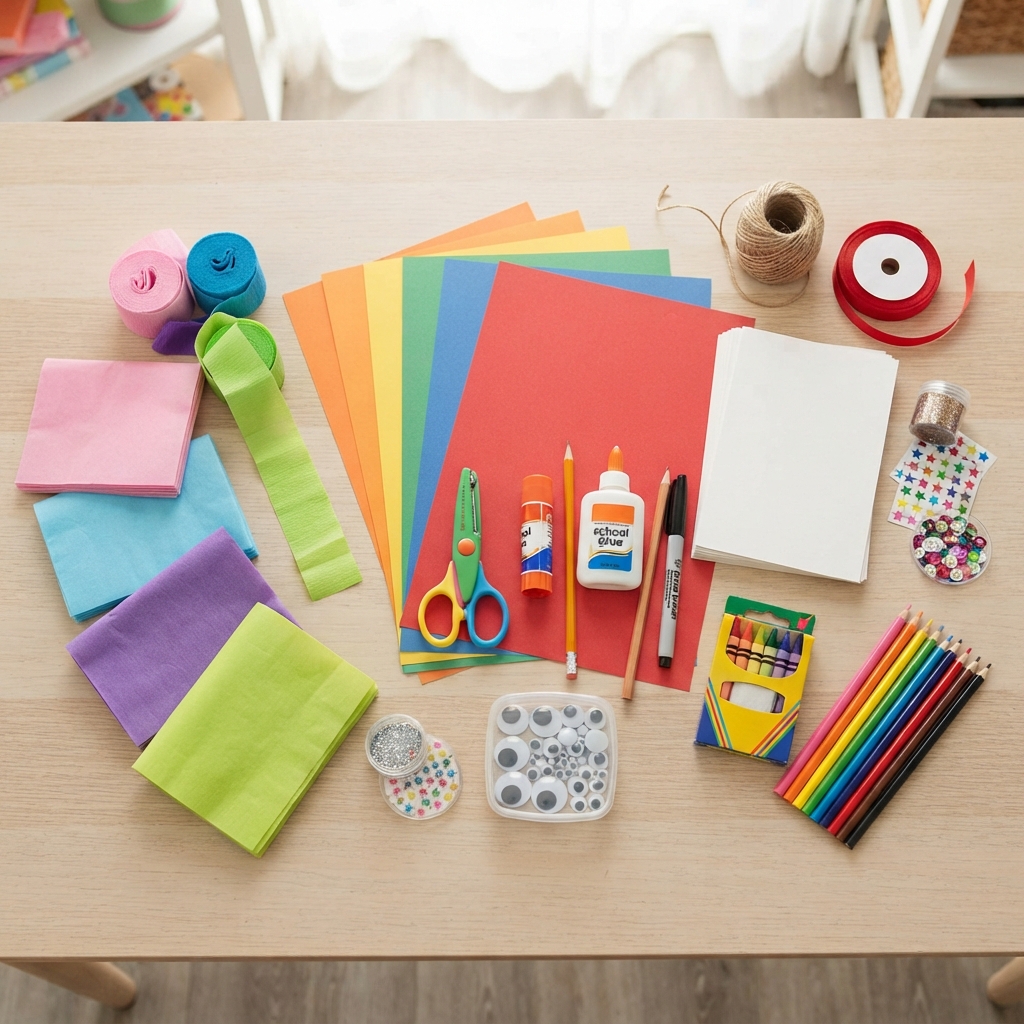
This craft requires only a few simple supplies that are commonly found at home or in school.
Materials include:
- Colored construction paper
- White cardstock or craft paper
- Tissue paper or crepe paper
- Child-safe scissors
- Glue stick or school glue
- Pencil
- Black marker
- Googly eyes (optional)
- Crayons or colored pencils
- Glitter, stickers, or sequins (optional)
- String or ribbon for hanging (optional)
Children can choose bright ocean colors such as blue, purple, pink, green, or yellow to make their jellyfish extra cheerful.
Step 1: Create the Jellyfish Body
Begin by drawing a large circle on colored paper.
Carefully cut out the circle.
To give the jellyfish a three-dimensional appearance, gently fold the circle in half or glue another slightly smaller circle on top. Younger children may simply use a flat circle as the body.
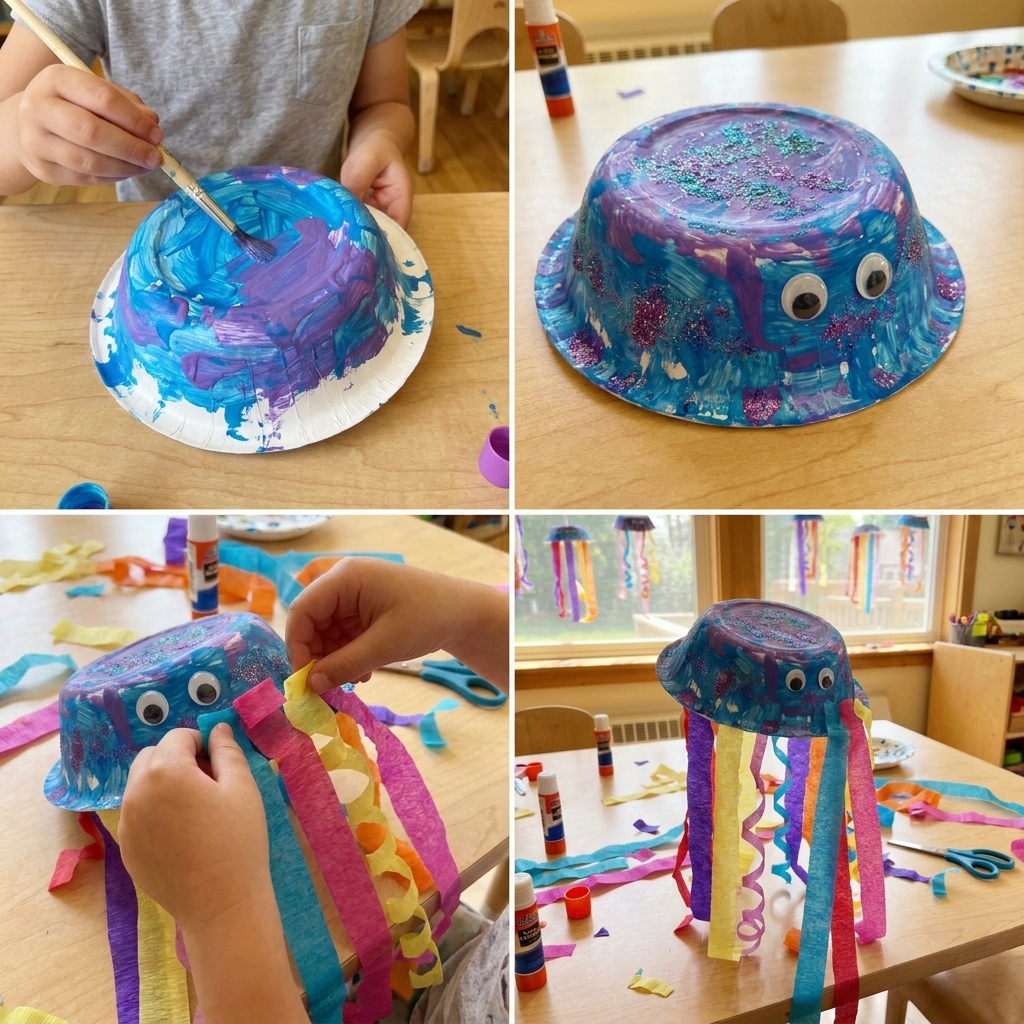
Decorate the body with colorful dots, swirls, zigzags, or stripes using markers or crayons.
Step 2: Make the Tentacles
The tentacles are one of the most exciting parts of the project.
Cut long strips of tissue paper, crepe paper, or construction paper.
Glue the strips to the bottom or back of the jellyfish body.
Try using strips of different lengths and colors to create movement and variety. Wrapping the strips around a pencil before attaching them creates curly tentacles that look as if they are floating in the water.
Step 3: Add the Face
Children enjoy giving their jellyfish a friendly personality.
Glue on two googly eyes or draw eyes with a black marker.
Add a smiling mouth, rosy cheeks, funny eyebrows, or long eyelashes. Every child can create a different expression, making each jellyfish unique.
Step 4: Decorate the Jellyfish
Now it’s time to make the jellyfish shine.
Children can add:
- Glitter
- Sequins
- Colorful stickers
- Small paper circles
- Sparkling stars
- Tiny hearts
- Decorative patterns
There is no right or wrong design. Every jellyfish can reflect the child’s own imagination.
Step 5: Build an Ocean Scene
The jellyfish looks even better inside an underwater habitat.
Glue the finished jellyfish onto blue construction paper or cardstock.
Decorate the background with:
- Seaweed
- Coral reefs
- Colorful fish
- Starfish
- Crabs
- Sea turtles
- Dolphins
- Octopuses
- Shells
- Sand
- Ocean bubbles
Children can create an entire underwater world filled with marine life.
Turn It into a Hanging Decoration
This project can also become a moving decoration.
Punch a small hole at the top of the jellyfish.
Thread a piece of string or ribbon through the hole.
Hang the jellyfish from a classroom ceiling, bedroom window, reading corner, or party decoration. As the air moves, the tentacles gently sway, making the jellyfish appear to float through the ocean.
Learn About Jellyfish
Craft time is also a wonderful opportunity to learn science.
Share these interesting facts with children:
- Jellyfish have lived in Earth’s oceans for hundreds of millions of years.
- They do not have bones, a brain, or a heart.
- Their bodies are made mostly of water.
- Some jellyfish glow in the dark.
- They use their tentacles to catch tiny sea animals for food.
- Jellyfish can be found in oceans all around the world.
Learning about real jellyfish helps children connect art with science.
Storytelling Activity
Once the project is complete, encourage children to invent stories about their jellyfish.
Ask questions such as:
- What is your jellyfish’s name?
- Where does it live?
- Who are its underwater friends?
- What adventure will it have today?
- What treasures might it discover on the ocean floor?
Storytelling develops imagination, speaking skills, vocabulary, and creative thinking.
Classroom Extension Ideas
Teachers can expand the activity with cross-curricular learning.
Students can:
- Label the parts of a jellyfish.
- Compare jellyfish with fish, octopuses, and sea turtles.
- Write a short paragraph about marine animals.
- Read ocean-themed storybooks.
- Create a classroom ocean mural filled with everyone’s artwork.
- Present interesting jellyfish facts to classmates.
These activities combine art, science, reading, and writing in an engaging way.
Family Craft Time
Parents can easily complete this project at home.
Working together allows families to:
- Spend quality time together.
- Encourage creativity.
- Practice communication.
- Explore ocean life.
- Celebrate children’s artistic achievements.
Simple craft projects often become treasured family memories.
Creative Challenges for Older Children
Older children may enjoy adding extra details to their jellyfish.
Ideas include:
- Layering paper to create a 3D effect.
- Using different textures such as tissue paper and cardstock.
- Designing several species of jellyfish.
- Creating a complete ocean ecosystem.
- Making a mobile with multiple jellyfish hanging at different heights.
These activities encourage problem-solving and artistic growth.
Skills Children Develop
This project helps children build many valuable skills, including:
- Fine motor development
- Hand-eye coordination
- Scissor control
- Gluing techniques
- Color recognition
- Shape recognition
- Creativity
- Patience
- Focus
- Self-confidence
These skills support learning in both art and academic subjects.
Display the Finished Artwork
Completed jellyfish can brighten many spaces.
Display them on:
- Classroom bulletin boards
- Hallway art galleries
- Bedroom walls
- Library displays
- Summer camp exhibitions
- Ocean-themed classroom decorations
Children feel proud when their artwork is displayed for others to admire.
Conclusion
A paper jellyfish making project is an enjoyable and educational activity that combines creativity, science, and hands-on learning. Using simple materials such as colored paper, glue, scissors, and imagination, children can create beautiful ocean creatures while developing important artistic and motor skills. Along the way, they discover fascinating facts about marine life, practice following directions, and gain confidence by completing a project from start to finish.
Whether the activity takes place at home, in a classroom, or during a community craft event, making a paper jellyfish inspires curiosity about the ocean and encourages children to express their creativity. Every finished jellyfish is unique, reflecting the imagination and personality of its creator. Most importantly, children learn that with a little patience and a lot of imagination, an ordinary piece of paper can become a colorful underwater masterpiece.
