
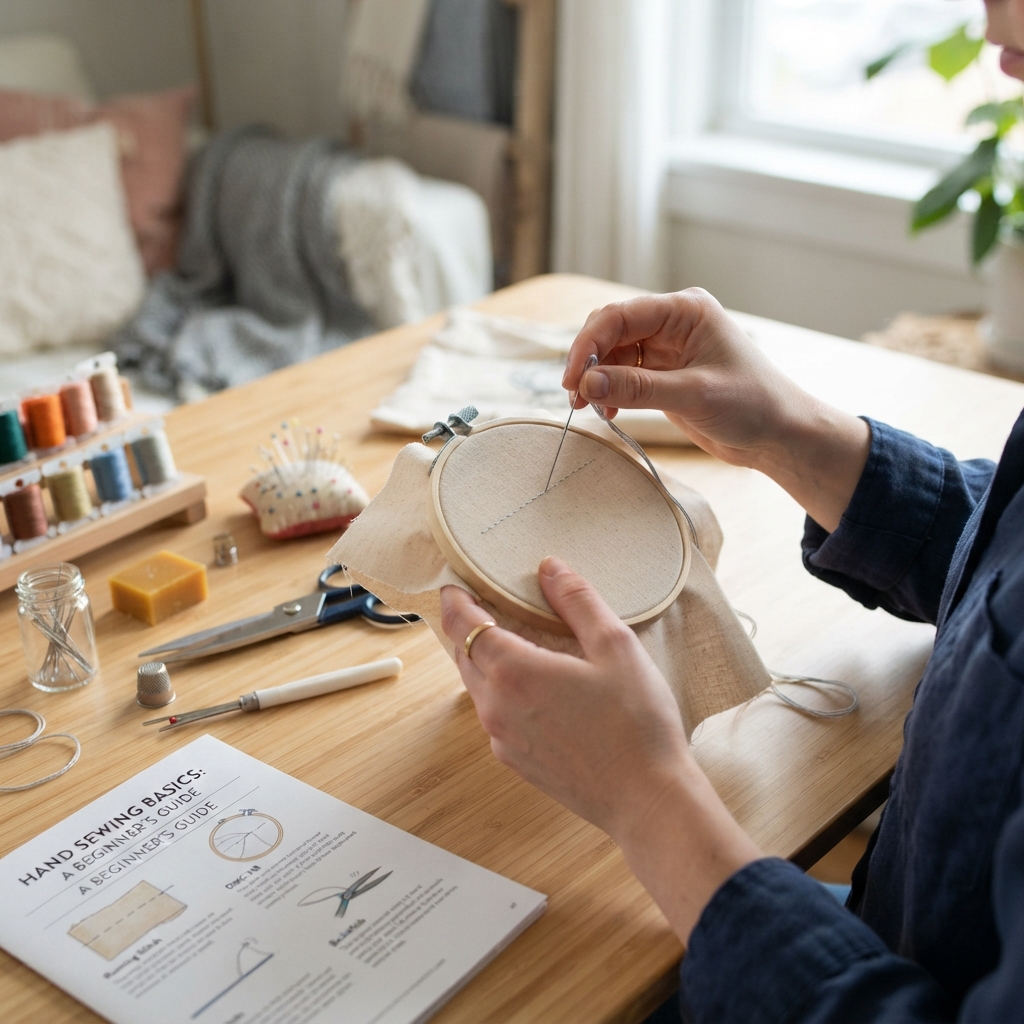
Hand sewing is one of the most useful and rewarding skills anyone can learn. Long before sewing machines became common, people stitched clothing, repaired household items, and created beautiful decorations using only a needle and thread. Today, hand sewing remains an essential skill for beginners, hobbyists, and anyone who wants to make simple repairs or enjoy creative DIY projects.
The good news is that learning the basics of hand sewing doesn’t require expensive tools or years of practice. With a few supplies and some patience, you can master the essential techniques and start creating handmade projects with confidence.
Why Learn Hand Sewing?
Hand sewing is easy to learn, portable, and affordable. You don’t need electricity or a sewing machine, making it perfect for beginners of all ages.
Some benefits of hand sewing include:
- Repairing torn clothes
- Sewing on buttons
- Hemming pants and skirts
- Making simple crafts
- Creating personalized gifts
- Developing patience and fine motor skills
- Saving money by fixing items instead of replacing them
Whether you’re sewing for fun or practical reasons, this timeless skill is both enjoyable and useful.
Essential Hand Sewing Supplies
Before you begin, gather a few basic tools. Most of these supplies are inexpensive and easy to find.
Sewing Needles
Needles come in different sizes for different fabrics. Beginners should choose medium-sized needles that are easy to hold and thread.
Thread
Use good-quality polyester or cotton thread that matches your fabric. Strong thread helps create durable stitches.
Fabric Scissors
Sharp fabric scissors make cutting fabric easier and prevent frayed edges.
Small Embroidery Scissors
These are useful for trimming loose threads neatly.
Pins or Sewing Clips
Pins hold fabric pieces together while you sew.
Pin Cushion
A pin cushion keeps your pins organized and easy to access.
Measuring Tape
Flexible measuring tapes help you measure fabric accurately.
Tailor’s Chalk or Fabric Marker
These tools allow you to mark sewing lines that can be removed later.
Practice Fabric
Cotton fabric is ideal for beginners because it is easy to handle and sew.
Step 1: Thread the Needle
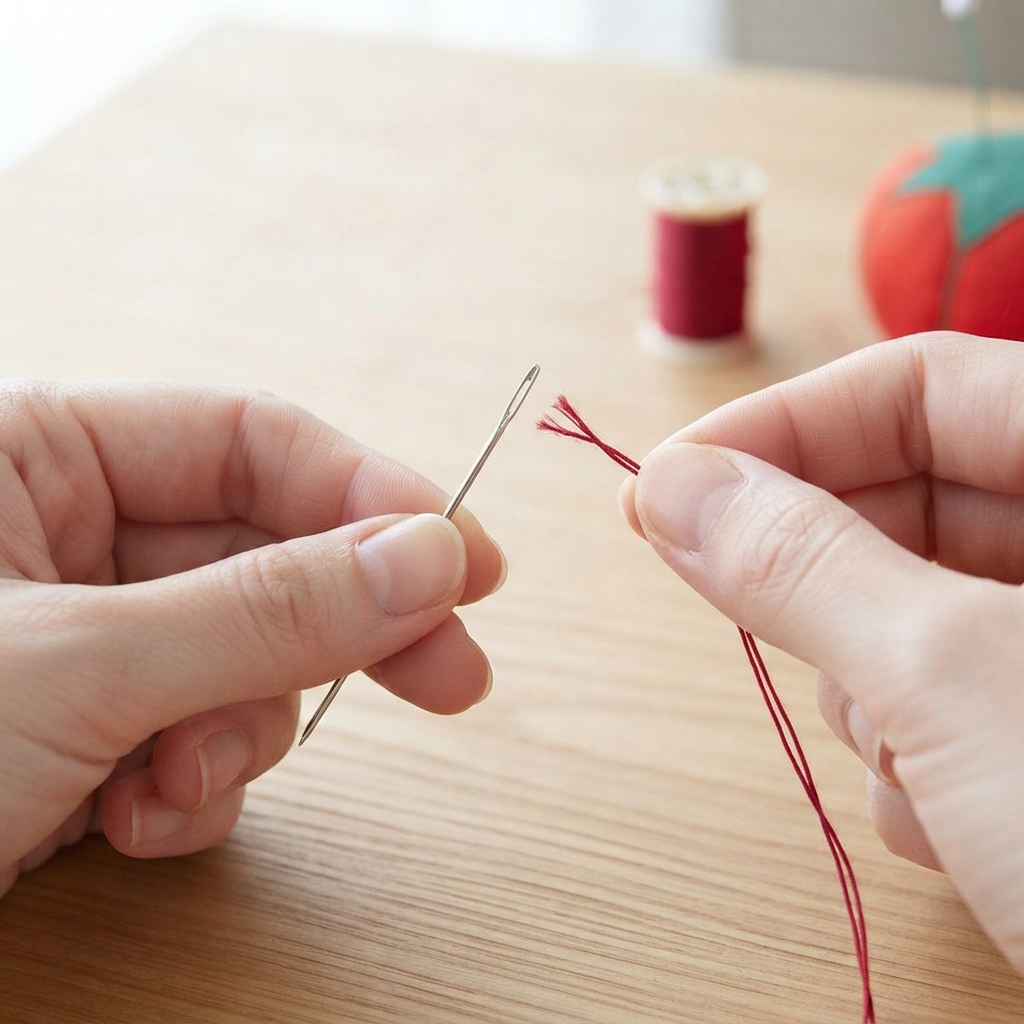
Threading a needle is the first skill every beginner should master.
Follow these simple steps:
- Cut about 18 to 24 inches of thread.
- Trim the thread end cleanly.
- Insert the thread through the eye of the needle.
- Pull the thread until both ends are even.
- Tie a small knot at the end.
Your needle is now ready for sewing.
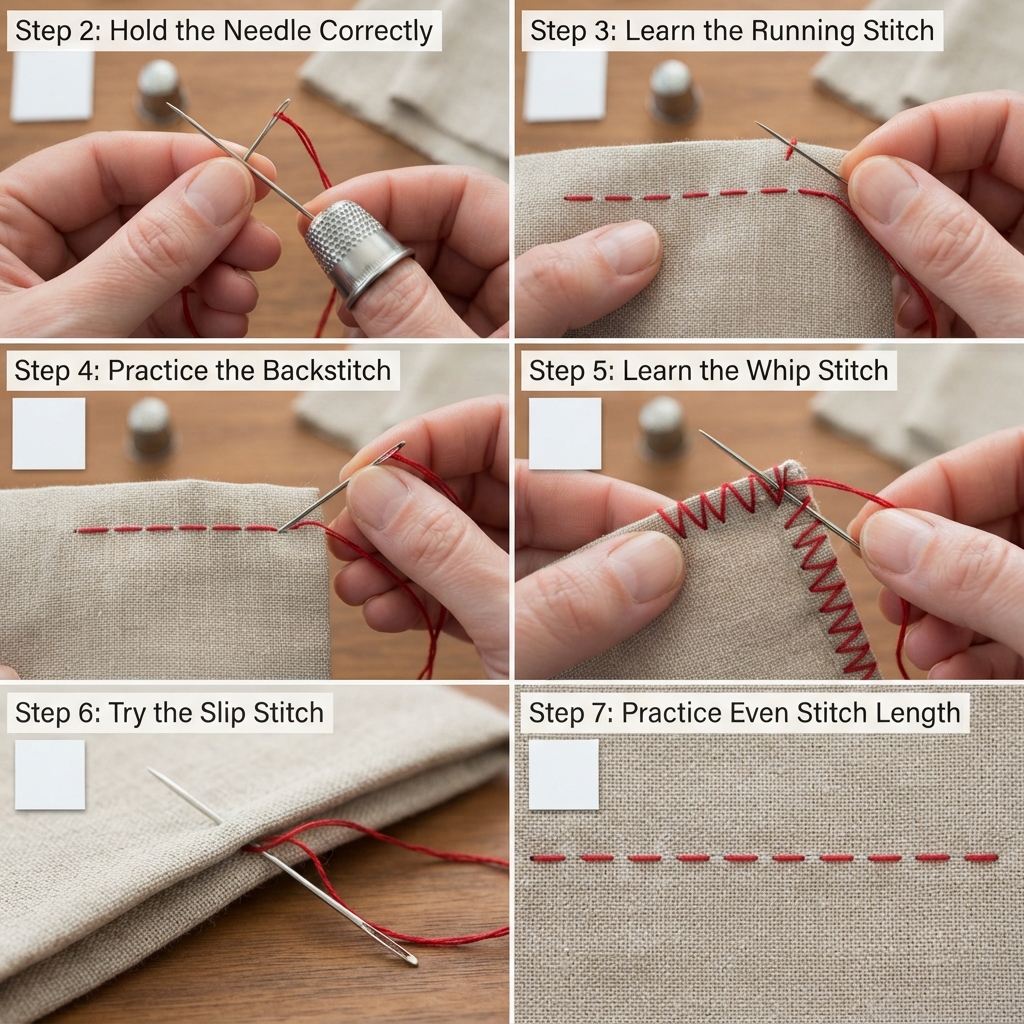
Step 2: Hold the Needle Correctly
Hold the needle between your thumb and index finger while supporting it with your middle finger.
Many sewists wear a thimble on the middle finger to protect it while pushing the needle through thick fabric.
Step 3: Learn the Running Stitch
The running stitch is the easiest hand stitch and an excellent starting point.
To sew a running stitch:
- Push the needle up through the fabric.
- Pull the thread until the knot stops it.
- Insert the needle back into the fabric a short distance away.
- Continue making evenly spaced stitches.
Running stitches are commonly used for temporary seams and decorative projects.
Step 4: Practice the Backstitch
The backstitch creates one of the strongest hand-sewn seams.
To make a backstitch:
- Sew one stitch forward.
- Bring the needle back behind the previous stitch.
- Insert the needle into the end of the previous stitch.
- Repeat across the fabric.
Backstitches produce durable seams suitable for clothing repairs.
Step 5: Learn the Whip Stitch
The whip stitch is useful for joining fabric edges and finishing seams.
Simply wrap the thread around the fabric edge with evenly spaced stitches.
This stitch is commonly used for felt crafts and small sewing projects.
Step 6: Try the Slip Stitch
The slip stitch creates nearly invisible seams.
It is perfect for:
- Closing pillows
- Finishing stuffed toys
- Hemming garments
- Invisible repairs
Although slightly more advanced, beginners can learn it with practice.
Step 7: Practice Even Stitch Length
Neat sewing depends on consistent stitches.
Try to make every stitch:
- The same length
- Evenly spaced
- Straight
- Tight enough to hold but not so tight that the fabric wrinkles
Practicing on scrap fabric helps improve stitch consistency.
Choosing the Right Fabric
Some fabrics are easier to sew than others.
Beginners should start with:
- Cotton
- Felt
- Flannel
- Linen blends
- Canvas
Avoid slippery fabrics like silk or stretchy knit fabrics until you gain more experience.
Common Beginner Mistakes
Everyone makes mistakes while learning.
Here are some common ones:
Using Thread That Is Too Long
Very long thread tangles easily.
Pulling the Thread Too Tight
This causes fabric to bunch and wrinkle.
Uneven Stitch Length
Practice helps improve consistency.
Skipping Knots
Always secure your thread before beginning and finishing a seam.
Using Dull Needles
Sharp needles glide through fabric more easily.
Easy Hand Sewing Projects
Once you’ve learned the basic stitches, try simple projects to build your confidence.
Good beginner projects include:
- Fabric bookmarks
- Felt keychains
- Small pillows
- Drawstring bags
- Reusable napkins
- Handkerchiefs
- Fabric coasters
- Simple plush toys
Each project introduces new techniques while reinforcing the basics.
Helpful Tips for Success
Improve your hand sewing with these simple habits:
- Work in a well-lit area.
- Keep your sewing supplies organized.
- Practice every week.
- Iron fabric before sewing.
- Trim loose threads neatly.
- Sew slowly and carefully.
- Don’t worry about making mistakes—they’re part of learning.
Patience is one of the most valuable sewing tools.
Safety Tips
Hand sewing involves sharp tools, so always practice safely.
Remember to:
- Store needles in a pin cushion.
- Keep scissors closed when not in use.
- Never leave pins on the floor.
- Work at a clean table.
- Keep sewing supplies away from young children without supervision.
A safe workspace makes sewing more enjoyable.
Benefits of Mastering Hand Sewing
As your skills improve, you’ll discover countless ways to use them.
You can:
- Repair favorite clothing
- Customize garments
- Create handmade gifts
- Decorate your home
- Reduce waste by repairing items
- Enjoy a relaxing and creative hobby
Hand sewing is a valuable life skill that offers practical and creative rewards.
Final Thoughts
Learning the basics of hand sewing is a wonderful first step into the world of sewing. By mastering simple stitches such as the running stitch, backstitch, whip stitch, and slip stitch, you’ll gain the confidence to repair clothing, complete DIY crafts, and create handmade projects. Start with easy fabrics, practice regularly, and don’t be discouraged by small mistakes. Every stitch brings you closer to becoming a skilled hand sewist, and with time, you’ll enjoy the satisfaction of creating beautiful items with nothing more than a needle, thread, and your own hands.
