
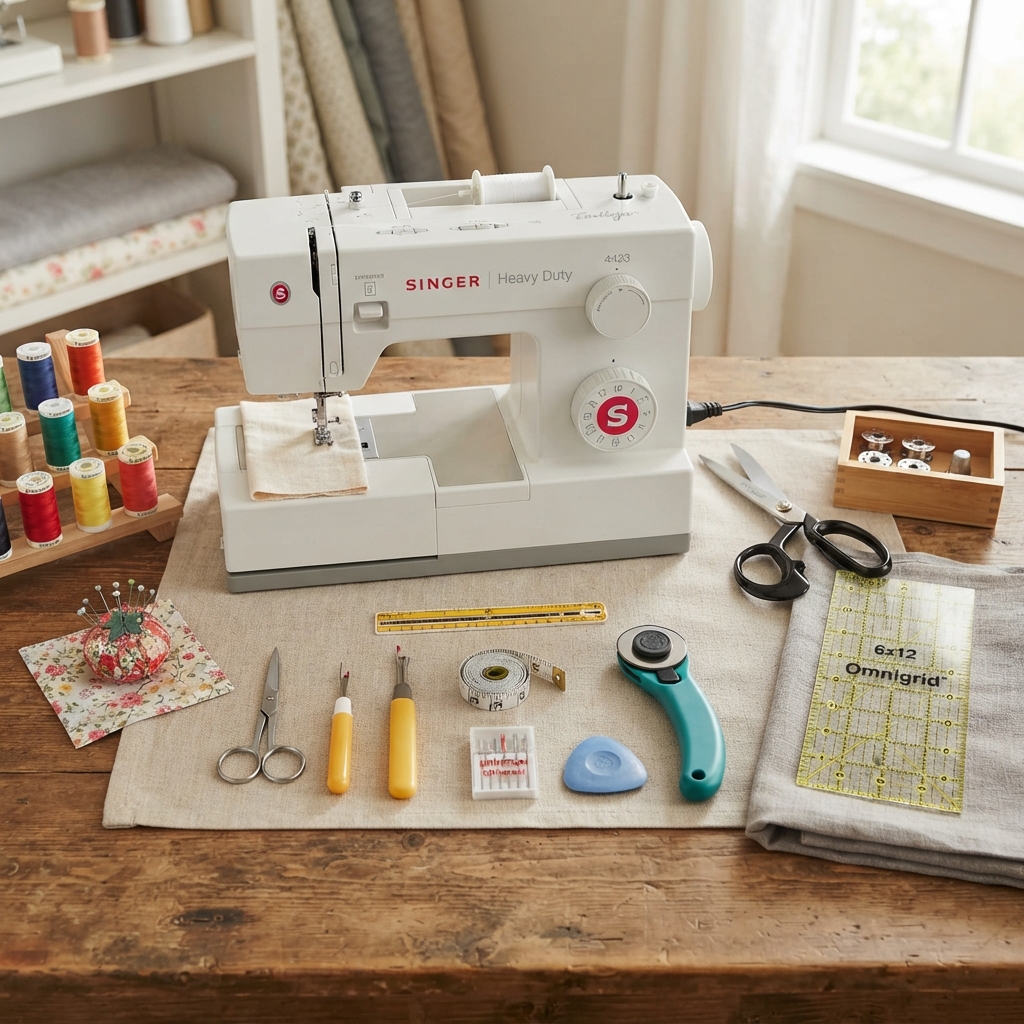
Starting your sewing journey is exciting, but having the right tools can make learning much easier and more enjoyable. While it’s tempting to buy every sewing gadget available, beginners only need a small collection of essential tools to complete simple projects and build confidence. Choosing high-quality basics will help you create neat stitches, accurate measurements, and professional-looking results.
In this guide, you’ll discover the best sewing tools every beginner should have, why each one is important, and how to use them effectively.
Why the Right Sewing Tools Matter
Using proper sewing tools saves time, improves accuracy, and makes sewing more enjoyable. Good-quality equipment also helps prevent mistakes such as uneven cuts, crooked seams, and damaged fabric.
Instead of struggling with unsuitable tools, you’ll be able to focus on learning new techniques and completing projects successfully.
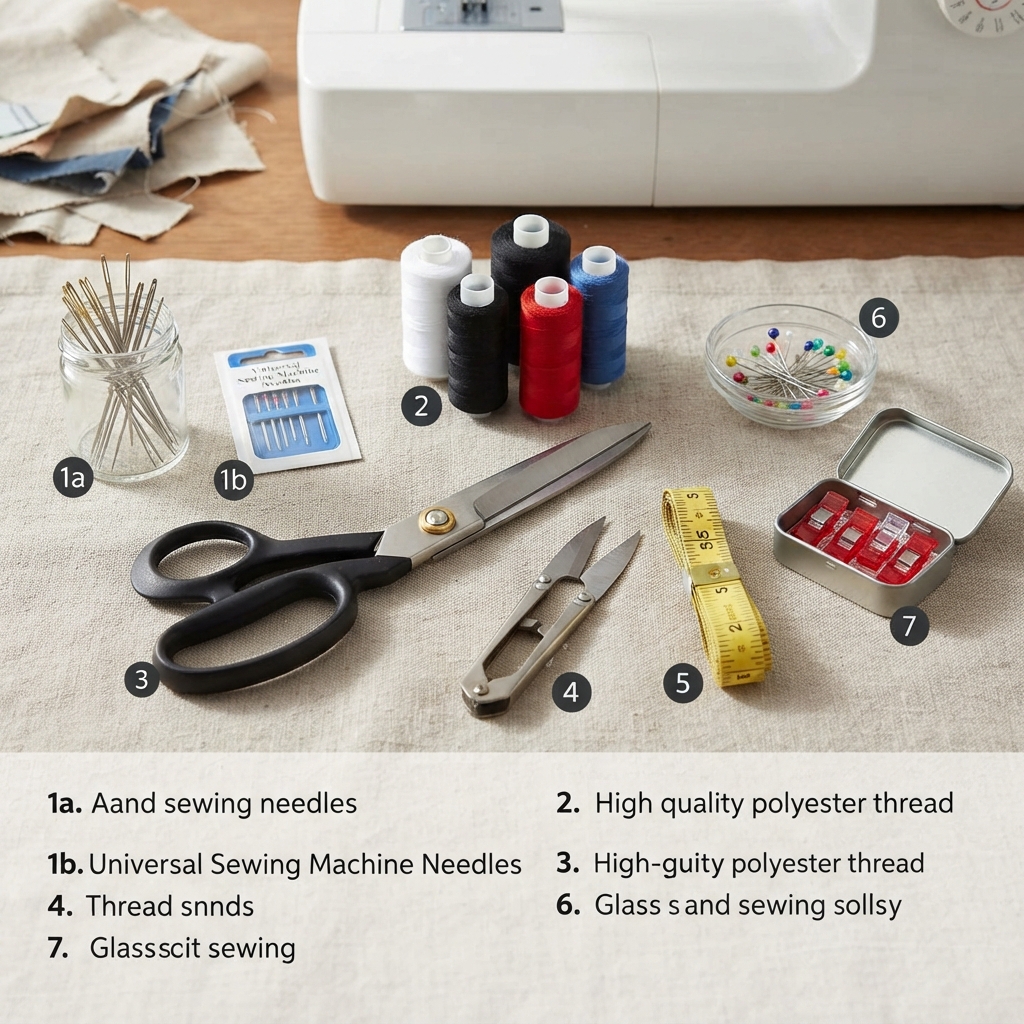
1. Sewing Needles
A sewing needle is the most essential tool in any sewing kit. Whether you prefer hand sewing or machine sewing, using the correct needle is important.
Hand Sewing Needles
Hand sewing needles come in different sizes and are suitable for repairing clothes, attaching buttons, and making small crafts.
Sewing Machine Needles
If you own a sewing machine, keep several spare needles on hand. Different fabrics require different needle types, so replacing worn or damaged needles regularly helps maintain smooth stitching.
2. High-Quality Thread
Strong thread creates durable seams and prevents stitches from breaking.
For beginners, polyester thread is an excellent all-purpose choice because it works well with most fabrics. Cotton thread is another good option for natural fabrics and quilting projects.
Choose thread that matches the color of your fabric for the neatest finish.
3. Fabric Scissors
Never use ordinary household scissors for cutting fabric.
Fabric scissors are specially designed with sharp blades that produce clean, accurate cuts without fraying the material.
Reserve your fabric scissors for fabric only to keep them sharp.
4. Small Thread Snips or Embroidery Scissors
Small scissors are perfect for trimming loose threads and making precise cuts in tight spaces.
They are lightweight, easy to handle, and an essential addition to any beginner’s sewing kit.
5. Measuring Tape
A flexible measuring tape allows you to measure body dimensions, fabric pieces, and sewing projects accurately.
Accurate measurements are one of the keys to successful sewing, especially when making clothing.
6. Sewing Pins
Pins temporarily hold fabric pieces together before sewing.
Choose fine, sharp pins with colorful heads that are easy to see and remove while working.
Glass-head pins are especially useful because they can withstand heat from an iron.
7. Sewing Clips
Fabric clips are an excellent alternative to pins.
They work particularly well with:
- Thick fabrics
- Leather
- Vinyl
- Multiple fabric layers
- Delicate fabrics that could be damaged by pinholes
Many beginners enjoy using both pins and clips depending on the project.
8. Pin Cushion
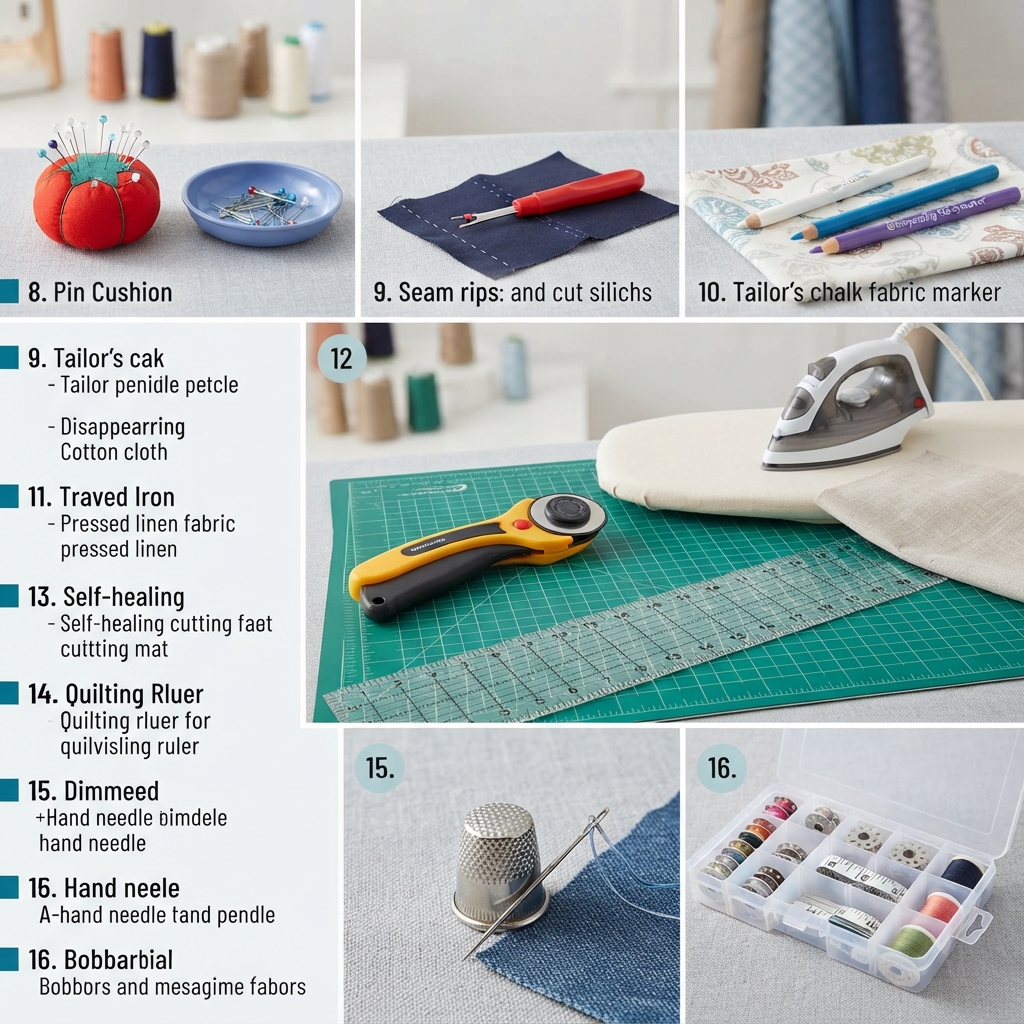
A pin cushion keeps your pins organized and within easy reach.
Magnetic pin holders are another popular option because they quickly collect dropped pins and help keep your workspace safe.
9. Seam Ripper
Every beginner makes mistakes, which makes a seam ripper one of the most valuable sewing tools you can own.
It allows you to remove stitches carefully without damaging the fabric.
Even experienced sewists use seam rippers regularly.
10. Tailor’s Chalk or Fabric Marker
These tools allow you to mark cutting lines, hems, darts, and pattern markings directly on fabric.
Most markings disappear after washing or ironing, making them safe for temporary use.
11. Iron and Ironing Board
Many beginners underestimate the importance of pressing fabric.
An iron helps:
- Remove wrinkles
- Flatten seams
- Improve accuracy
- Give finished projects a professional appearance
Pressing throughout the sewing process produces much better results than ironing only at the end.
12. Rotary Cutter
Although optional for complete beginners, a rotary cutter is useful for cutting long, straight lines quickly.
It works best when paired with a self-healing cutting mat and a quilting ruler.
Always use caution, as rotary cutters are extremely sharp.
13. Self-Healing Cutting Mat
A cutting mat protects your table while allowing safe use of a rotary cutter.
The printed measurement grid also helps improve cutting accuracy.
14. Clear Sewing Ruler
Transparent rulers make measuring and cutting easier.
Many include grid lines that help you cut straight edges and mark precise seam allowances.
15. Thimble
A thimble protects your finger while pushing the needle through thick fabric.
It is especially useful for hand sewing projects involving denim, canvas, or multiple fabric layers.
16. Fabric Storage Box
Keeping your sewing supplies organized saves time and prevents tools from becoming lost or damaged.
A small storage box with compartments is perfect for beginners.
Optional Tools for Growing Sewists
As your sewing skills improve, you may want to add more specialized tools, such as:
- Fabric clips in multiple sizes
- Bias tape maker
- Buttonhole cutter
- Point turner
- Sleeve board
- Walking foot for your sewing machine
- Pattern weights
- Dressmaker’s ruler
- Bodkin for threading elastic
- Loop turner
These tools are helpful but not necessary when you’re first starting.
Beginner Sewing Kit Checklist
Here is a simple checklist of the most important sewing tools:
- Sewing needles
- Strong thread
- Fabric scissors
- Small thread snips
- Measuring tape
- Straight pins
- Sewing clips
- Pin cushion
- Seam ripper
- Tailor’s chalk
- Iron
- Ironing board
- Practice fabric
- Storage box
With these basics, you’ll be ready for many beginner-friendly sewing projects.
Tips for Buying Sewing Tools
When shopping for sewing supplies, keep these tips in mind:
- Buy the best quality you can afford.
- Read customer reviews before purchasing.
- Replace dull needles and worn scissors regularly.
- Keep tools clean and organized.
- Avoid buying unnecessary gadgets until you gain more experience.
Investing in durable tools will save money in the long run.
Caring for Your Sewing Tools
Proper care helps your tools last for years.
Remember to:
- Keep scissors dry and sharp.
- Store needles safely.
- Clean your sewing machine regularly.
- Replace damaged pins.
- Organize thread away from sunlight and moisture.
Simple maintenance keeps your sewing equipment in excellent condition.
Final Thoughts
Building a beginner sewing kit doesn’t have to be expensive or overwhelming. By starting with a few essential tools—such as needles, thread, fabric scissors, pins, a measuring tape, and a seam ripper—you’ll have everything you need to learn the basics and complete your first sewing projects. As your confidence grows, you can gradually add more specialized tools to your collection. With the right equipment and regular practice, sewing becomes an enjoyable, creative hobby that can provide practical skills for a lifetime.
