
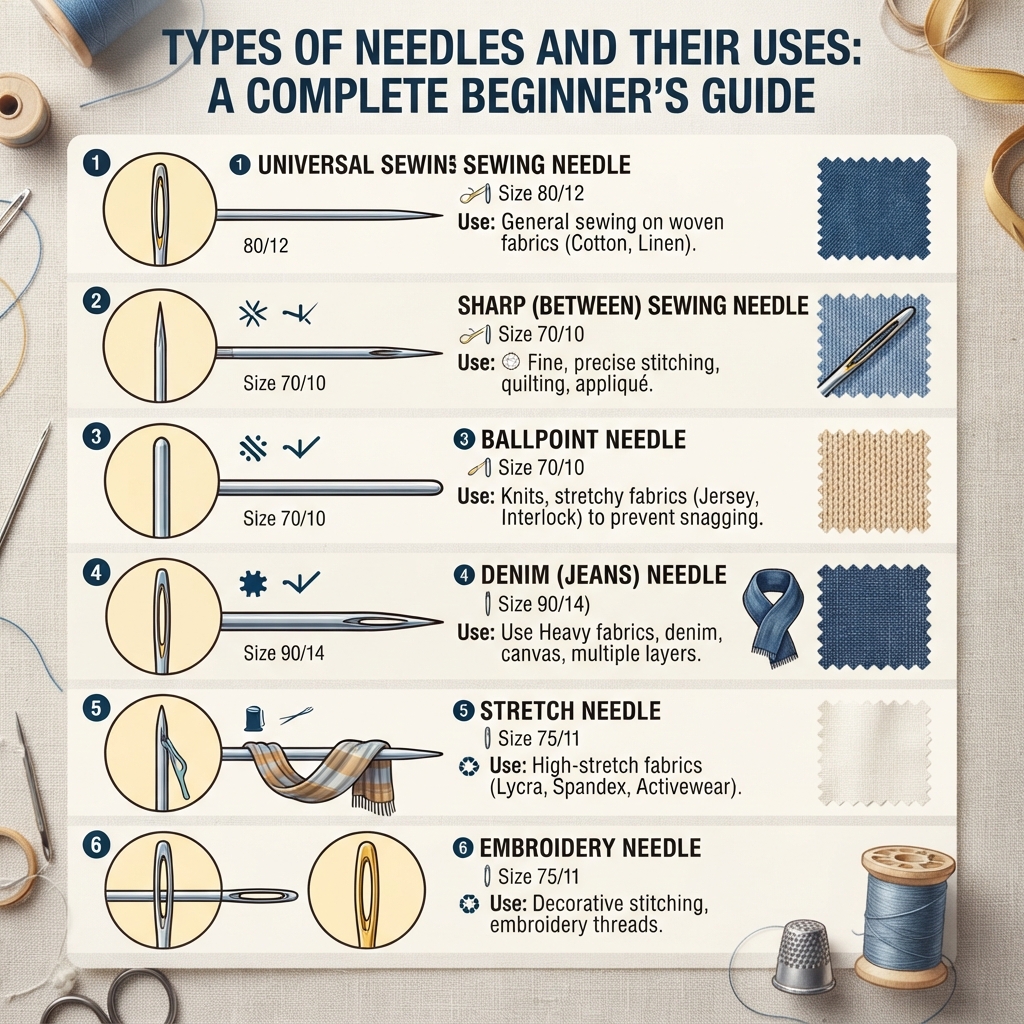
Choosing the right needle is one of the most important steps in any sewing project. While needles may look similar, each type is designed for a specific purpose and fabric. Using the correct needle can make sewing easier, improve stitch quality, and prevent damage to your fabric or sewing machine.
Whether you’re sewing by hand or using a sewing machine, understanding the different types of needles and their uses will help you achieve better results. This guide introduces the most common needle types and explains when to use each one.
Why Choosing the Right Needle Matters
Every fabric has unique characteristics. Lightweight cotton requires a different needle than thick denim or stretchy knit fabric. Using the wrong needle can cause skipped stitches, broken threads, damaged fabric, or even a broken needle.
The right needle will:
- Create smoother stitches
- Reduce fabric damage
- Prevent thread breakage
- Improve sewing accuracy
- Extend the life of your sewing machine
Hand Sewing Needle Types
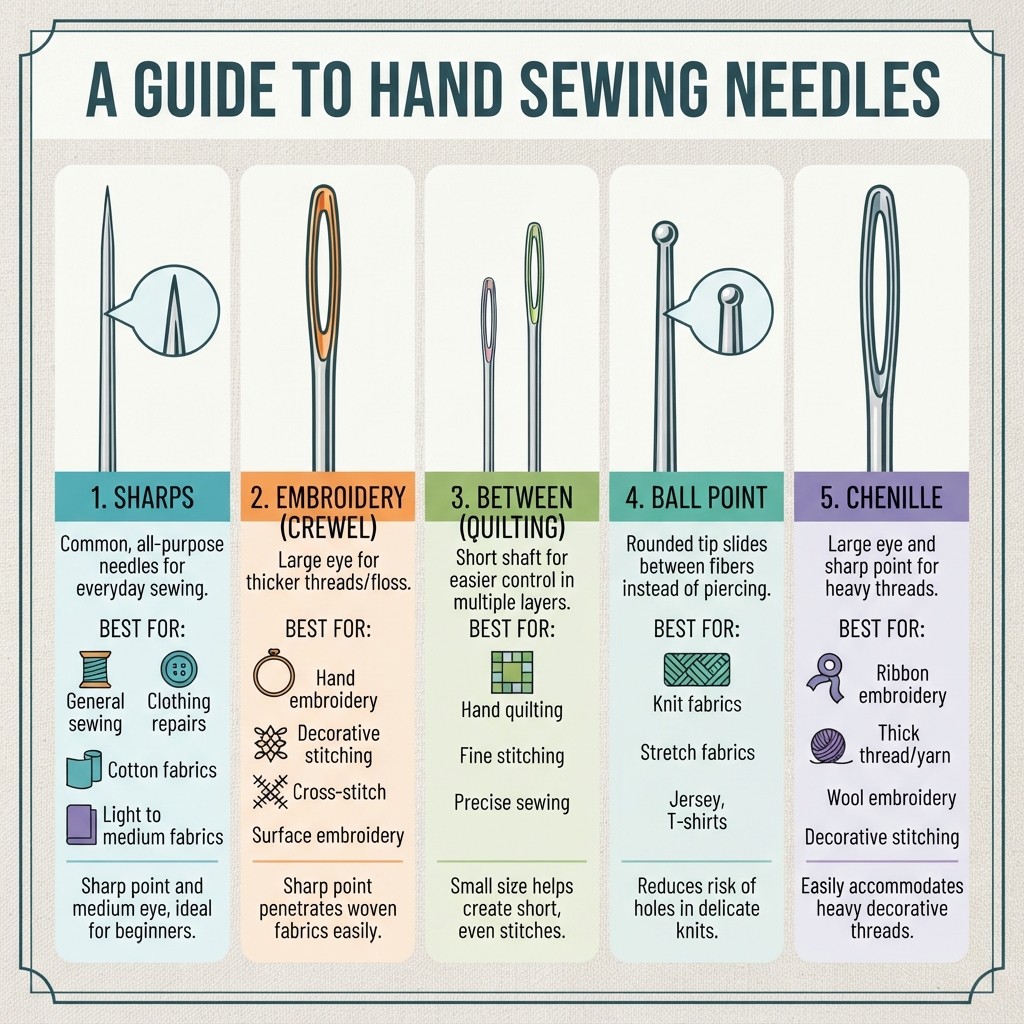
Hand sewing needles come in many shapes and sizes. Each type is designed for a specific sewing task.
1. Sharps
Sharps are the most common hand sewing needles and are ideal for everyday sewing.
Best for:
- General sewing
- Clothing repairs
- Cotton fabrics
- Linen
- Light to medium-weight fabrics
Sharps have a sharp point and a medium-sized eye, making them perfect for beginners.
2. Embroidery Needles (Crewel Needles)
Embroidery needles have a larger eye than sharps, allowing thicker embroidery floss to pass through easily.
Best for:
- Hand embroidery
- Decorative stitching
- Cross-stitch
- Surface embroidery
These needles have a sharp point that easily penetrates woven fabrics.
3. Between Needles (Quilting Needles)
Between needles are shorter than standard sewing needles, making them easier to control during quilting.
Best for:
- Hand quilting
- Fine stitching
- Precise sewing
Their small size helps create short, even stitches.
4. Ball Point Needles
Ball point hand needles have a rounded tip that slips between fabric fibers instead of piercing them.
Best for:
- Knit fabrics
- Stretch fabrics
- Jersey
- T-shirts
They reduce the risk of creating holes in delicate knit materials.
5. Chenille Needles
Chenille needles feature a large eye and a sharp point.
Best for:
- Ribbon embroidery
- Thick embroidery thread
- Decorative stitching
- Wool embroidery
They easily accommodate heavy decorative threads.
6. Tapestry Needles
Tapestry needles have a blunt tip instead of a sharp point.
Best for:
- Cross-stitch
- Needlepoint
- Plastic canvas
- Weaving in yarn ends
The blunt tip prevents splitting embroidery threads.
7. Leather Needles
Leather needles have a wedge-shaped point designed to cut through leather instead of pushing fibers aside.
Best for:
- Leather
- Faux leather
- Suede
- Vinyl
Never use leather needles on woven fabrics because they permanently cut the material.
8. Upholstery Needles
These needles are long, strong, and designed for heavy-duty work.
Best for:
- Furniture repair
- Thick fabric
- Heavy canvas
- Upholstery projects
Some upholstery needles are curved for sewing hard-to-reach areas.
Sewing Machine Needle Types
Machine needles also come in many varieties, each designed for different fabrics and sewing techniques.
9. Universal Needles
Universal needles are the most common sewing machine needles.
Best for:
- Cotton
- Polyester
- Linen
- Blended fabrics
- Everyday sewing
They are an excellent choice for beginners.
10. Ball Point Machine Needles
These needles have a rounded tip that slides between knitted fibers.
Best for:
- Knit fabrics
- Stretch jersey
- Interlock fabric
- Rib knit
They help prevent skipped stitches and fabric damage.
11. Stretch Needles
Stretch needles are specially designed for highly elastic fabrics.
Best for:
- Spandex
- Lycra
- Swimwear
- Activewear
They reduce skipped stitches while sewing stretchy materials.
12. Jeans (Denim) Needles
Denim needles have a reinforced shaft and sharp point.
Best for:
- Denim
- Canvas
- Heavy twill
- Thick woven fabrics
These strong needles resist bending under heavy fabric.
13. Leather Machine Needles
Leather machine needles have a cutting point similar to hand leather needles.
Best for:
- Leather
- Vinyl
- Faux leather
- Suede
Always choose the correct size based on the material’s thickness.
14. Quilting Needles
Machine quilting needles feature a tapered point designed for multiple fabric layers.
Best for:
- Quilting
- Patchwork
- Cotton batting
They produce clean, even stitches through layered fabrics.
15. Embroidery Machine Needles
Embroidery needles have a specially shaped eye to protect delicate embroidery thread.
Best for:
- Machine embroidery
- Decorative stitching
- Rayon thread
- Metallic embroidery thread
These needles help reduce thread breakage.
16. Topstitch Needles
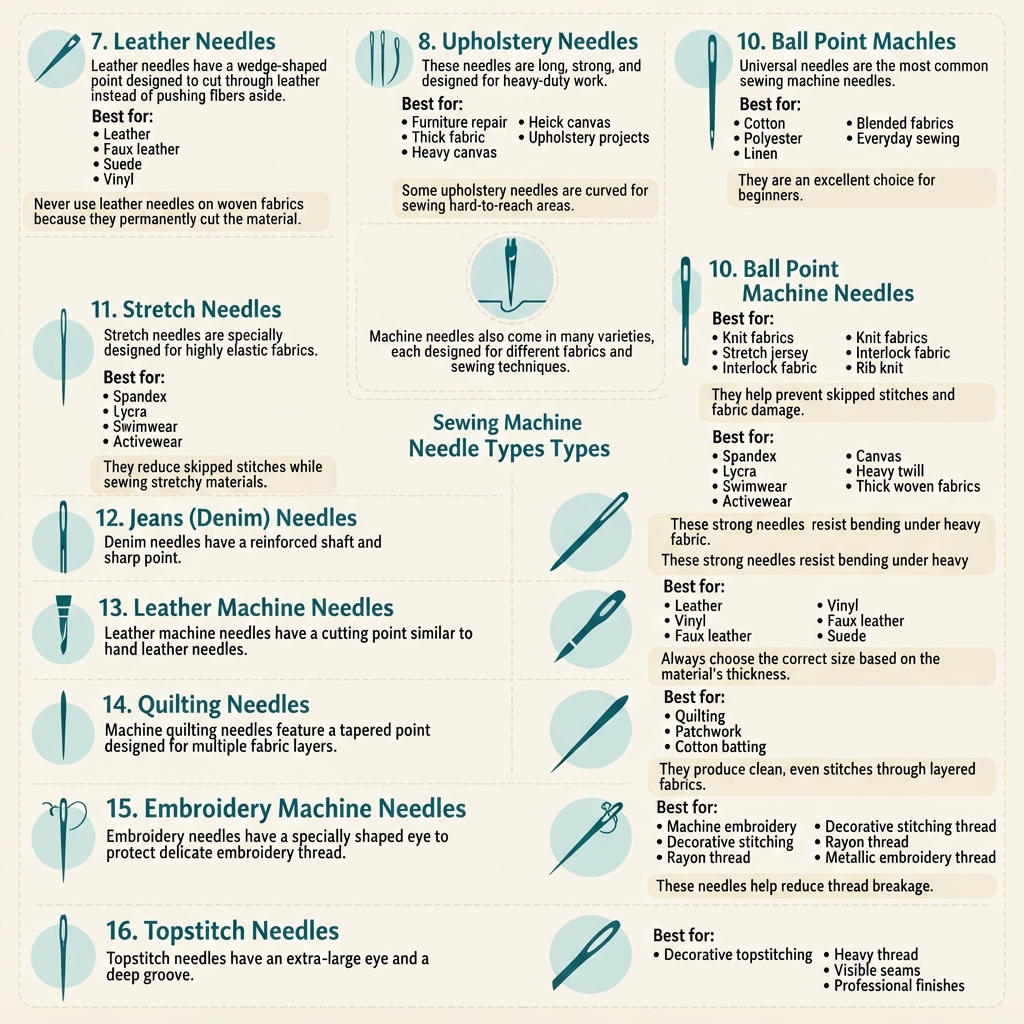
Topstitch needles have an extra-large eye and a deep groove.
Best for:
- Decorative topstitching
- Heavy thread
- Visible seams
- Professional finishes
They allow thicker thread to pass smoothly through the needle.
Understanding Needle Sizes
Needles come in different sizes to suit various fabrics.
Common sewing machine needle sizes include:
| Needle Size | Best For |
|---|---|
| 60/8 | Lightweight fabrics like silk and chiffon |
| 70/10 | Fine cotton and lightweight fabric |
| 80/12 | Medium-weight cotton and linen |
| 90/14 | Denim, canvas, and heavier cotton |
| 100/16 | Thick upholstery fabric |
| 110/18 | Very heavy fabrics and leather |
As a general rule, finer fabrics need smaller needles, while heavier materials require larger, stronger needles.
How Often Should You Replace a Needle?
A dull or damaged needle can ruin your sewing project.
Replace your sewing machine needle:
- After 8–10 hours of sewing
- At the start of a new project
- If the needle becomes bent
- If stitches begin skipping
- After sewing thick materials
Hand sewing needles should also be replaced when they become bent, rusty, or difficult to use.
Signs You’re Using the Wrong Needle
Watch for these common problems:
- Skipped stitches
- Broken thread
- Snagged fabric
- Uneven stitches
- Loud popping sounds while sewing
- Bent or broken needles
Switching to the correct needle often solves these issues immediately.
Tips for Storing Needles
Proper storage helps keep needles organized and in good condition.
- Store needles in labeled cases.
- Keep different sizes separated.
- Replace rusty or damaged needles.
- Keep needles away from moisture.
- Use a magnetic needle holder for convenience.
A well-organized needle collection makes sewing more efficient.
Final Thoughts
Understanding the different types of needles and their uses is an essential part of becoming a skilled sewist. From universal needles for everyday sewing to specialized leather, embroidery, quilting, and stretch needles, each type is designed to deliver the best results for specific fabrics and techniques. By selecting the correct needle and replacing it regularly, you’ll enjoy smoother stitching, fewer sewing problems, and more professional-looking projects. Whether you’re sewing by hand or with a machine, the right needle is a small tool that makes a big difference.
