
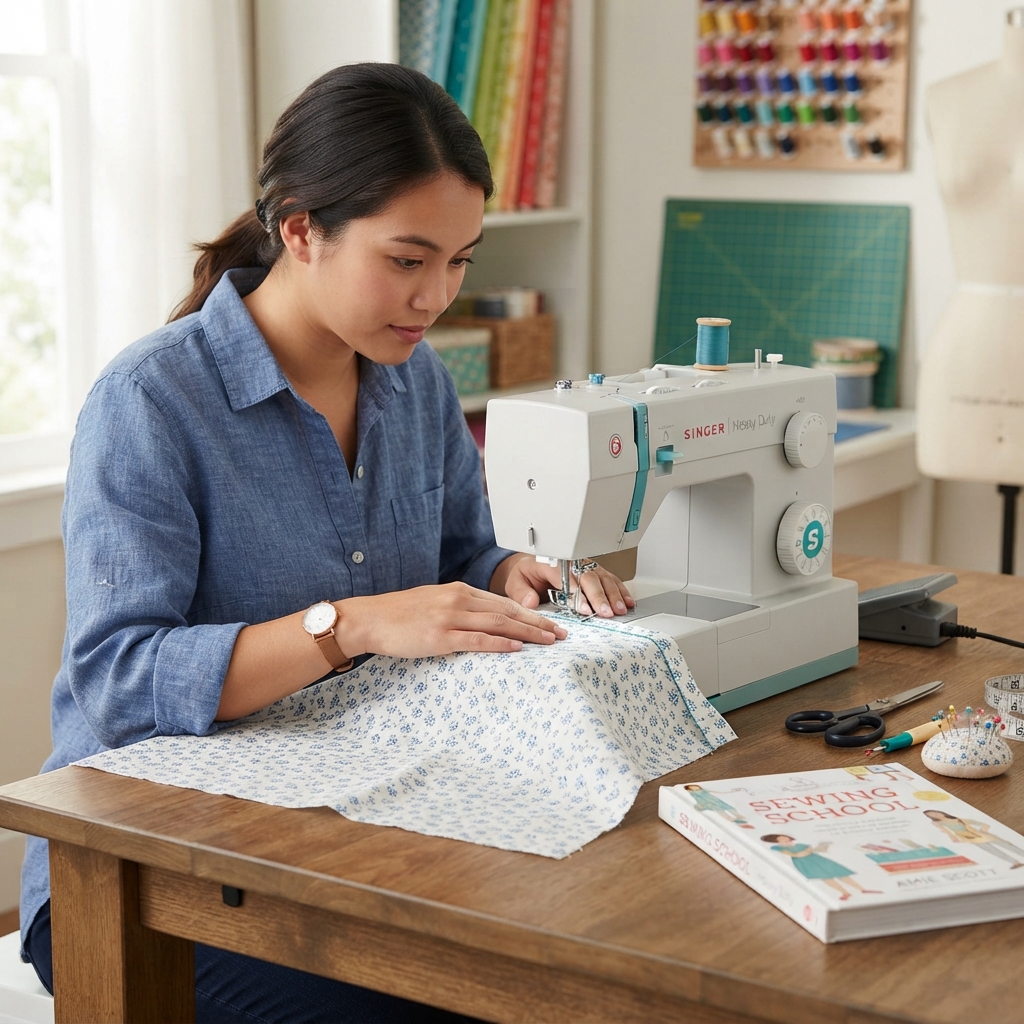
Sewing is a practical and rewarding skill that allows you to create, repair, and personalize clothing, home décor, and handmade gifts. Whether you dream of making your own clothes or simply want to fix a torn shirt, learning to sew is easier than you might think. With patience, the right tools, and regular practice, anyone can become confident with a needle and thread.
This step-by-step guide will help beginners understand the basics of sewing, from choosing supplies to completing their first simple project.
Why Learn to Sew?
Learning to sew offers many benefits beyond creating beautiful items. It helps you save money by repairing clothes instead of replacing them. Sewing also encourages creativity, improves concentration, and develops problem-solving skills. Many people find sewing relaxing because it allows them to focus on a hands-on activity while expressing their imagination.
Whether you use hand sewing or a sewing machine, this skill can last a lifetime.
Step 1: Gather Your Basic Sewing Supplies
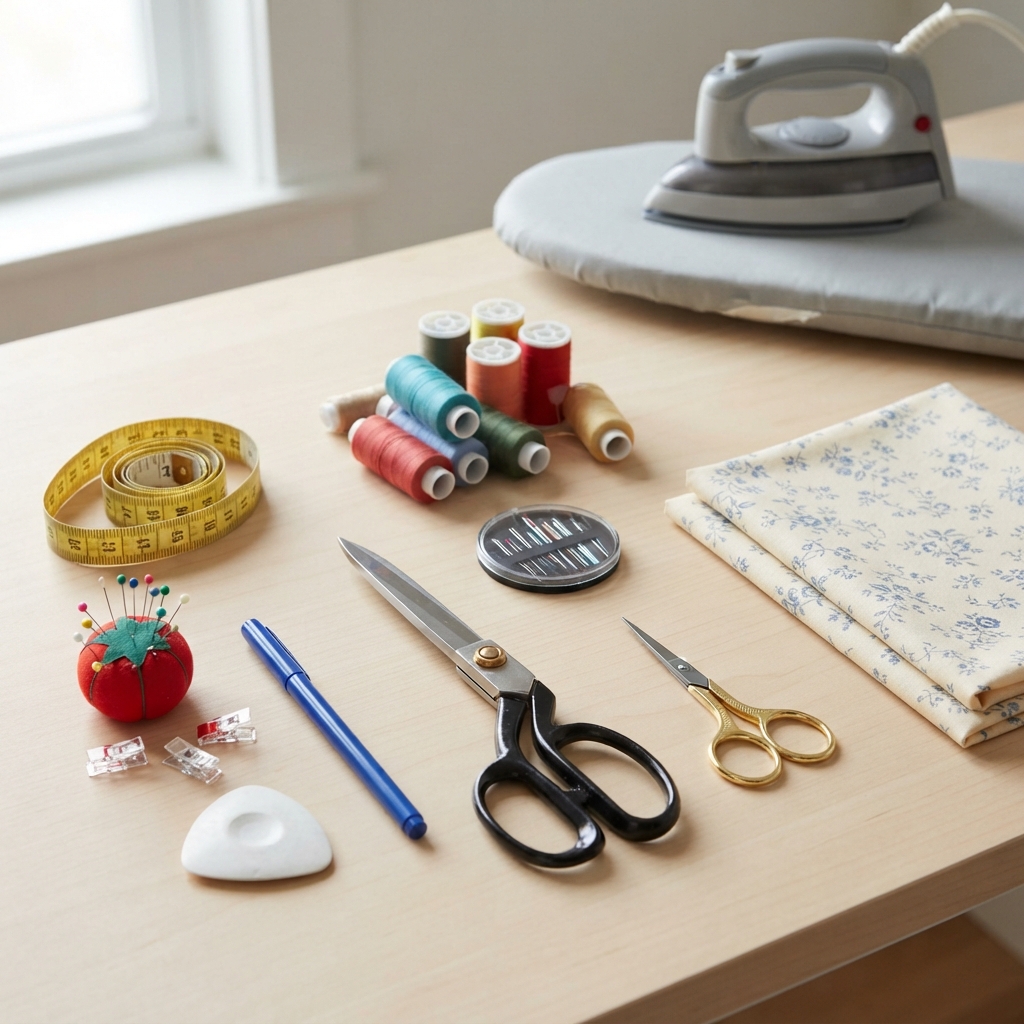
Before you begin, you’ll need a few essential tools. Fortunately, beginners don’t need expensive equipment.
Here are the basics:
- Sewing needles
- Good-quality thread
- Fabric scissors
- Small embroidery scissors
- Measuring tape
- Straight pins or sewing clips
- Pin cushion
- Fabric marker or tailor’s chalk
- Iron and ironing board
- Beginner-friendly cotton fabric
If you plan to use a sewing machine, choose a simple model with basic stitches.
Step 2: Learn the Parts of a Sewing Machine
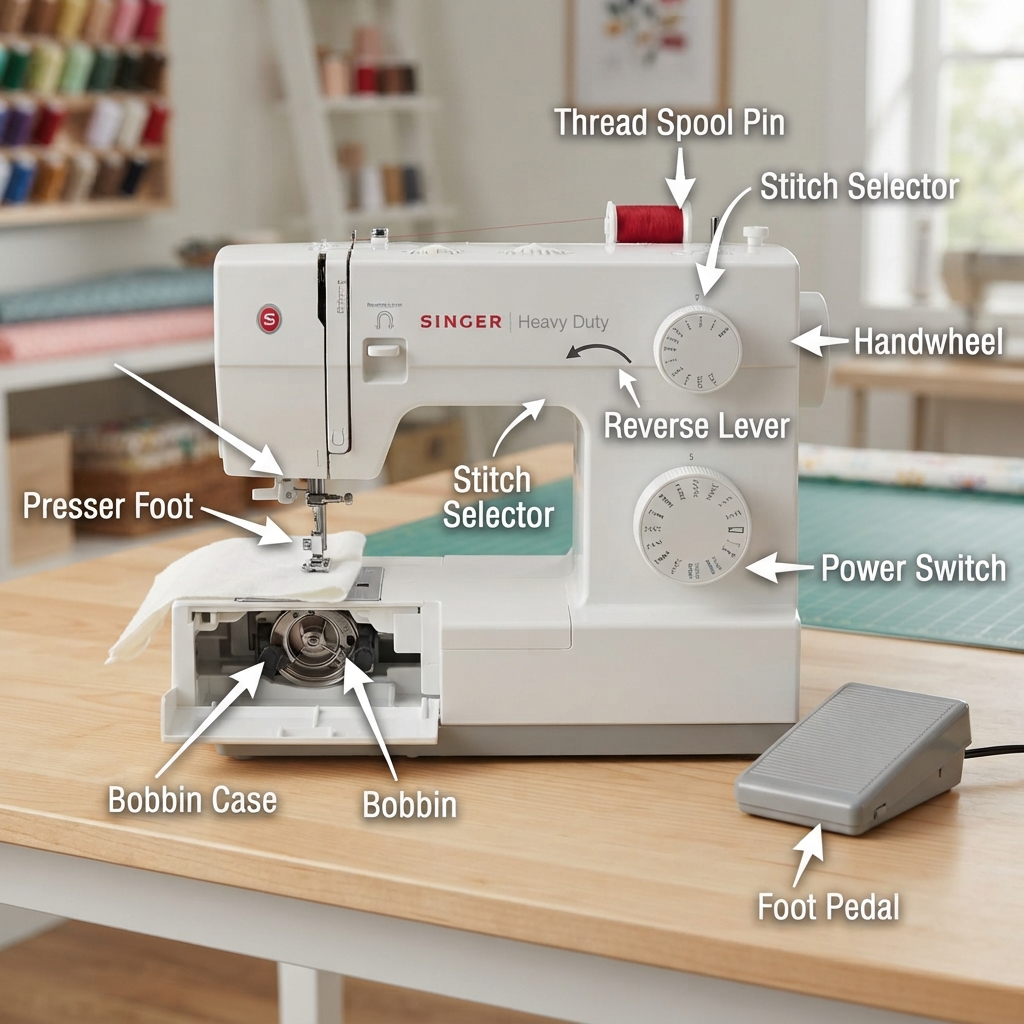
Don’t worry if a sewing machine looks complicated at first. Spend some time becoming familiar with its main parts.
Important parts include:
- Power switch
- Handwheel
- Presser foot
- Needle
- Bobbin
- Bobbin case
- Thread spool pin
- Stitch selector
- Reverse lever
- Foot pedal
Read the instruction manual carefully before turning on your machine.
Step 3: Practice Threading the Machine
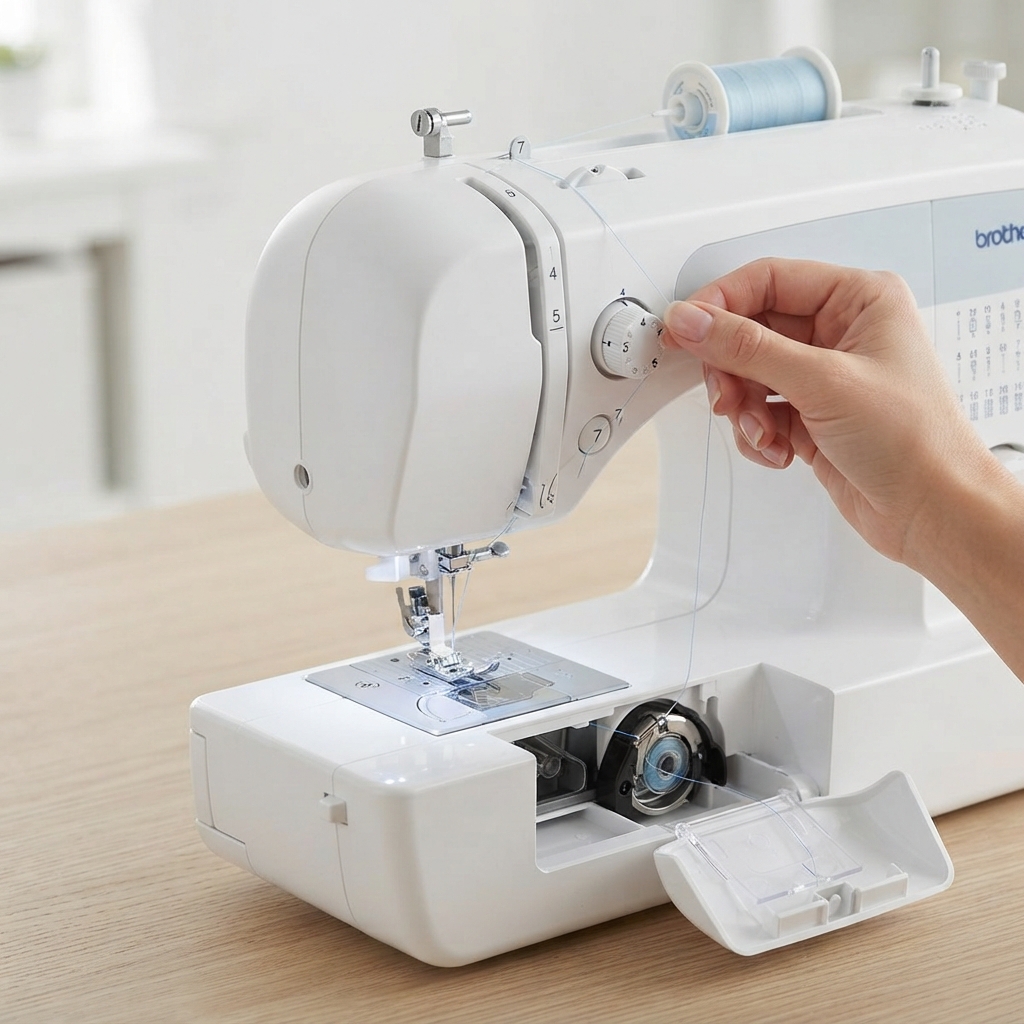
Threading is one of the first skills every beginner should master.
Follow these general steps:
- Place the thread spool on the spool pin.
- Guide the thread through the machine’s thread guides.
- Pass the thread through the tension discs.
- Thread the needle from front to back.
- Wind and insert the bobbin.
- Pull both threads beneath the presser foot.
Practice threading several times until it becomes easy.
Step 4: Learn Basic Hand Sewing Stitches
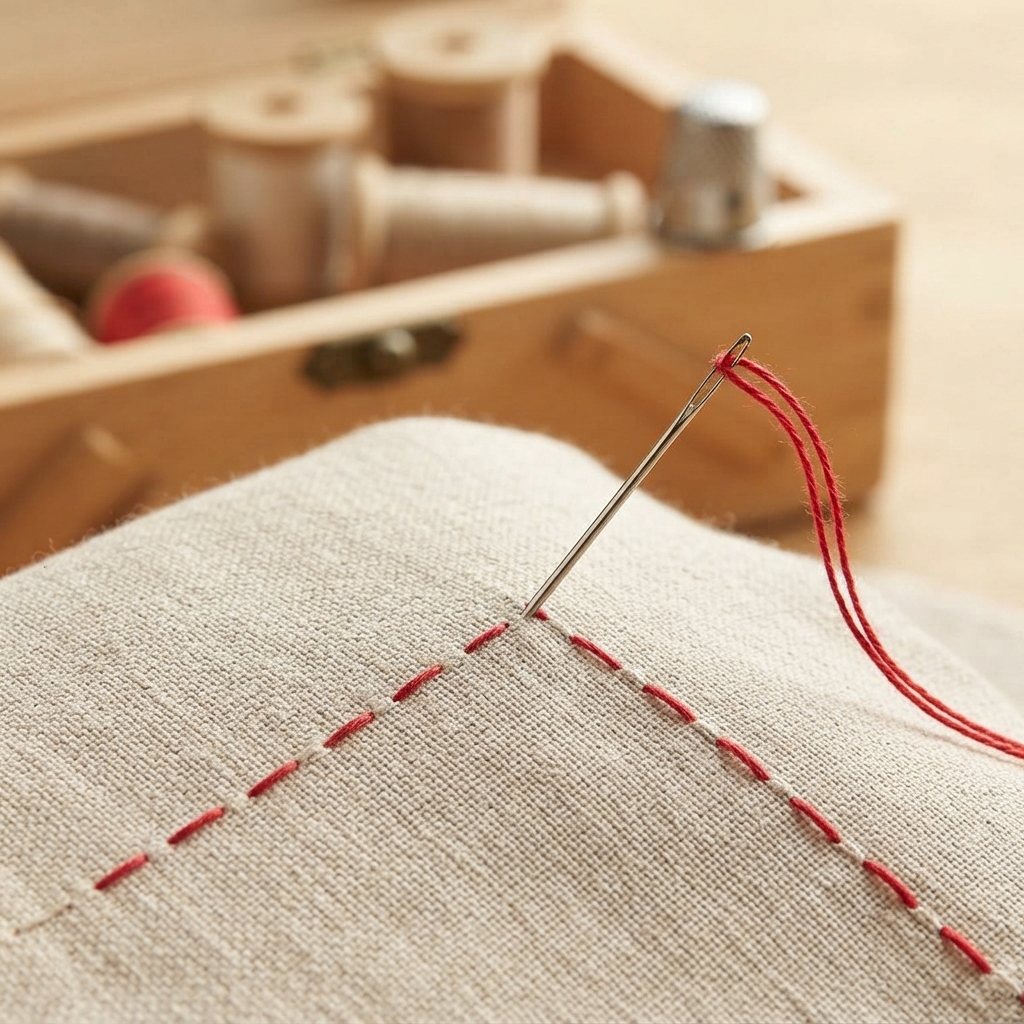
Even if you own a sewing machine, hand sewing remains an important skill.
Start with these stitches:
Running Stitch
The simplest stitch used for temporary seams and practice.
Backstitch
A strong stitch that creates durable seams.
Whip Stitch
Perfect for finishing fabric edges.
Slip Stitch
Nearly invisible and excellent for closing openings.
Practice each stitch on scrap fabric before starting real projects.
Step 5: Learn How to Sew Straight Lines
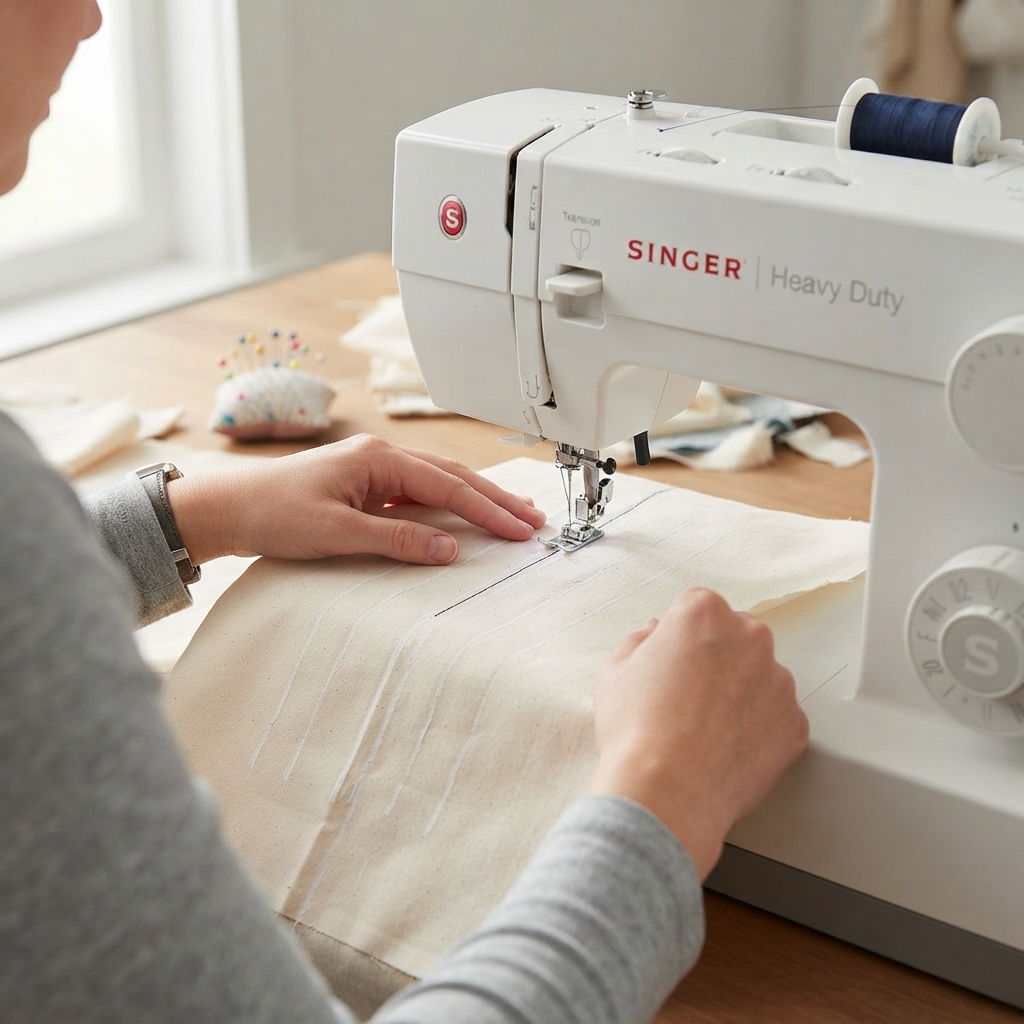
Straight stitching is the foundation of sewing.
Draw several parallel lines on scrap fabric using fabric chalk. Slowly sew directly on each line while keeping the fabric straight.
Don’t worry about speed.
Accuracy matters much more than sewing quickly.
Step 6: Practice Controlling the Fabric
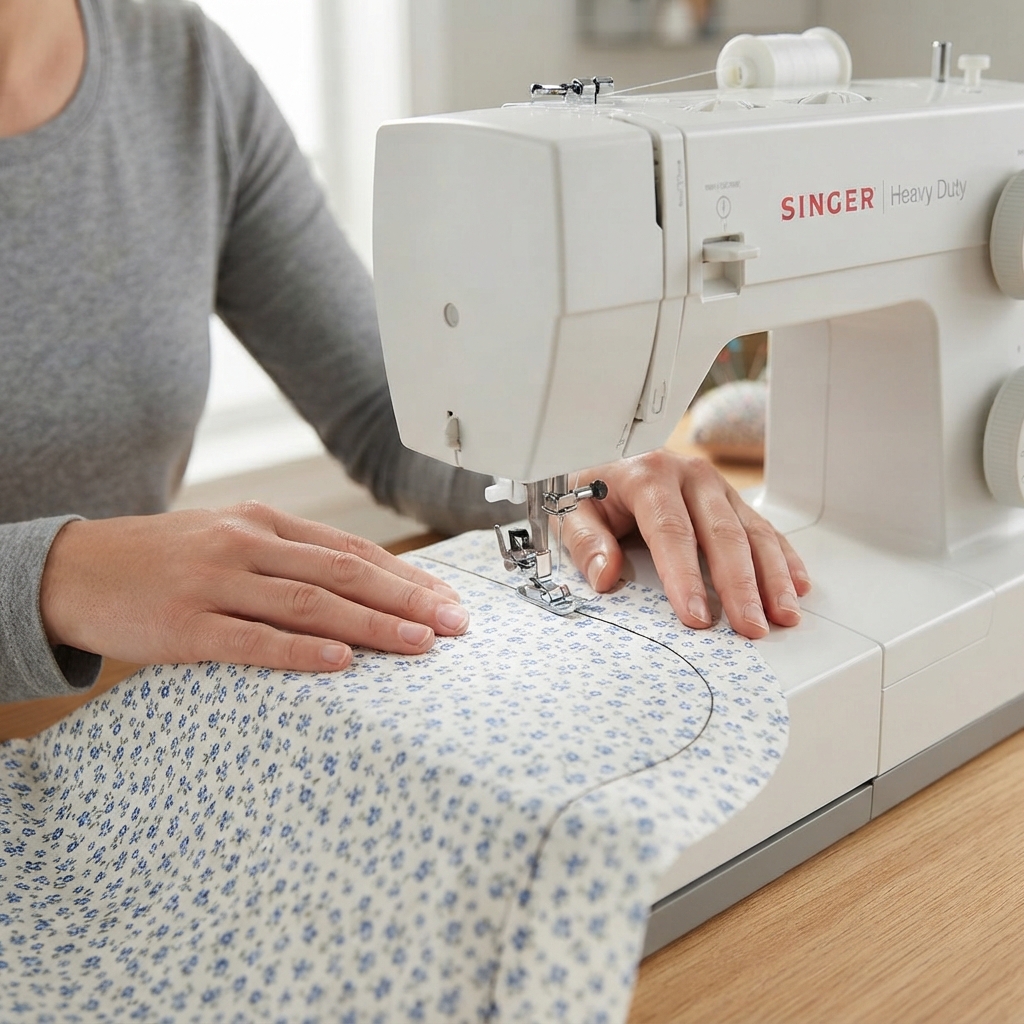
Avoid pulling the fabric through the machine.
Instead:
- Let the feed dogs move the fabric naturally.
- Guide the fabric gently with both hands.
- Keep your fingers safely away from the needle.
- Sew slowly around curves.
Good fabric control produces neat, professional-looking stitches.
Step 7: Understand Seam Allowances
A seam allowance is the distance between the fabric edge and the stitching line.
Most beginner sewing patterns use a seam allowance of:
- ¼ inch
- ⅜ inch
- ½ inch
- ⅝ inch
Always check the pattern instructions before sewing.
Step 8: Learn to Backstitch
Backstitching locks the stitches so they don’t come apart.
Simply:
- Sew forward several stitches.
- Press the reverse lever.
- Sew backward a few stitches.
- Continue sewing forward.
Repeat this at both the beginning and end of every seam.
Step 9: Press Your Fabric
Many beginners skip ironing, but pressing makes an enormous difference.
Press:
- Before cutting fabric
- After sewing each seam
- Before assembling pieces
- At the end of the project
A well-pressed project always looks more professional.
Step 10: Start with Easy Sewing Projects
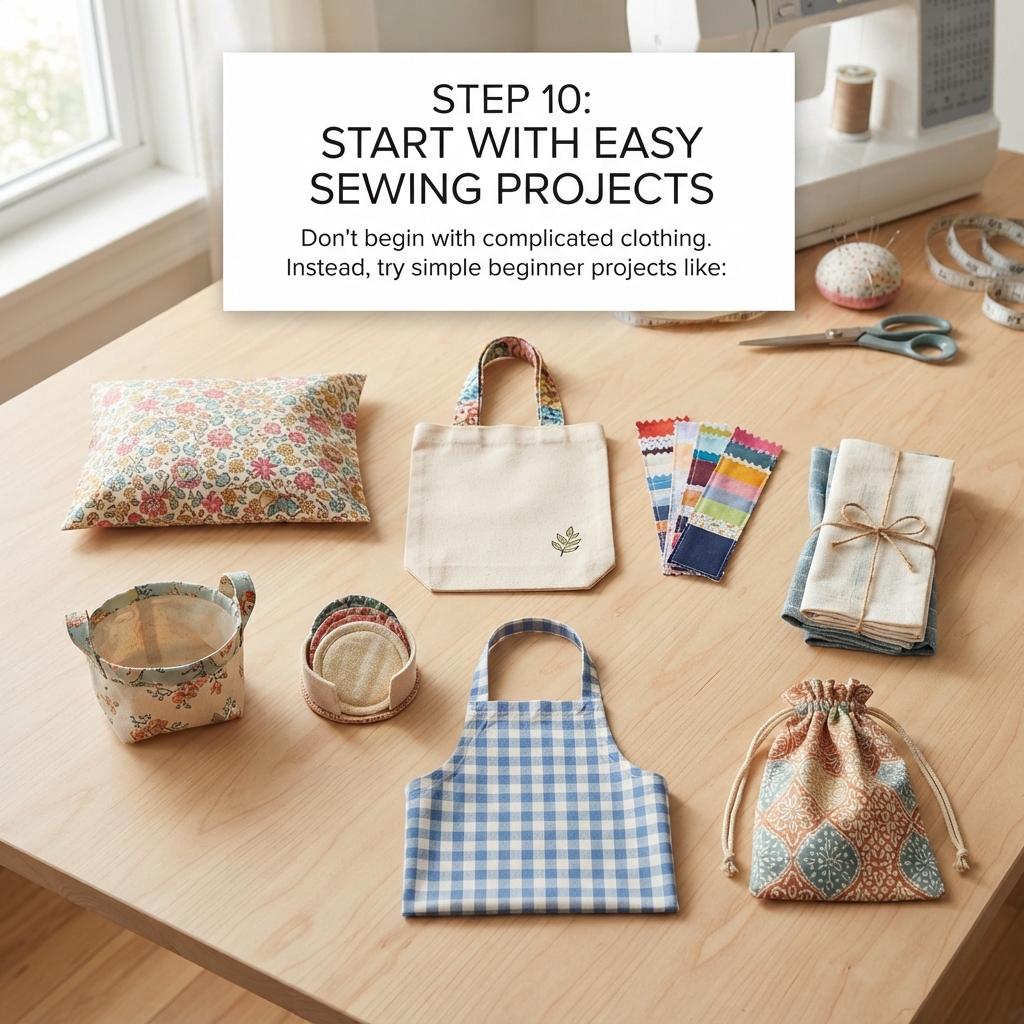
Don’t begin with complicated clothing.
Instead, try simple beginner projects like:
- Pillowcases
- Tote bags
- Fabric bookmarks
- Reusable napkins
- Drawstring bags
- Simple aprons
- Coasters
- Fabric baskets
Each project teaches new sewing techniques without becoming overwhelming.
Choosing the Best Fabric for Beginners
Cotton is the easiest fabric to sew.
Good beginner fabrics include:
- Quilting cotton
- Cotton canvas
- Linen blends
- Felt
- Flannel
Avoid slippery fabrics like satin or stretchy knit fabrics until you gain more experience.
Common Beginner Sewing Mistakes
Everyone makes mistakes while learning.
Common problems include:
Sewing Too Fast
Slow stitching improves accuracy.
Forgetting to Pin Fabric
Pins keep layers aligned.
Using Dull Needles
Replace needles regularly for cleaner stitches.
Ignoring Grain Direction
Always cut fabric according to the grainline.
Skipping Practice
Spend time practicing on scrap fabric before beginning a project.
Simple Sewing Terms Every Beginner Should Know
Learning sewing vocabulary makes following tutorials much easier.
Important terms include:
- Seam
- Hem
- Seam allowance
- Bobbin
- Presser foot
- Right side
- Wrong side
- Grainline
- Bias
- Notches
- Basting
- Topstitching
Understanding these terms builds confidence when reading sewing patterns.
Safety Tips for Beginners
Always sew safely.
Remember to:
- Keep fingers away from the needle.
- Turn off the machine when changing needles.
- Store scissors carefully.
- Use sharp sewing tools responsibly.
- Keep pins in a pin cushion.
- Work in a well-lit area.
Safety should always come first.
How to Improve Your Sewing Skills
Like any craft, sewing improves with practice.
Try these habits:
- Sew a little every week.
- Watch beginner tutorials.
- Learn one new technique at a time.
- Keep a sewing notebook.
- Join local or online sewing communities.
- Practice fixing mistakes instead of giving up.
Every project will help you become more skilled.
Benefits of Learning to Sew
As your skills grow, you’ll enjoy many advantages.
You can:
- Repair damaged clothing
- Create personalized gifts
- Decorate your home
- Save money
- Reduce clothing waste
- Design custom garments
- Build confidence through creativity
Sewing is both a practical life skill and an enjoyable hobby.
Final Thoughts
Learning to sew is a journey that starts with simple stitches and grows into endless creative possibilities. By mastering basic techniques, practicing regularly, and beginning with easy projects, you’ll quickly build confidence and improve your skills. Remember that every experienced sewist was once a beginner, so don’t be discouraged by small mistakes. With patience and persistence, you’ll soon be creating beautiful handmade projects that you can use, wear, and proudly share with others.
